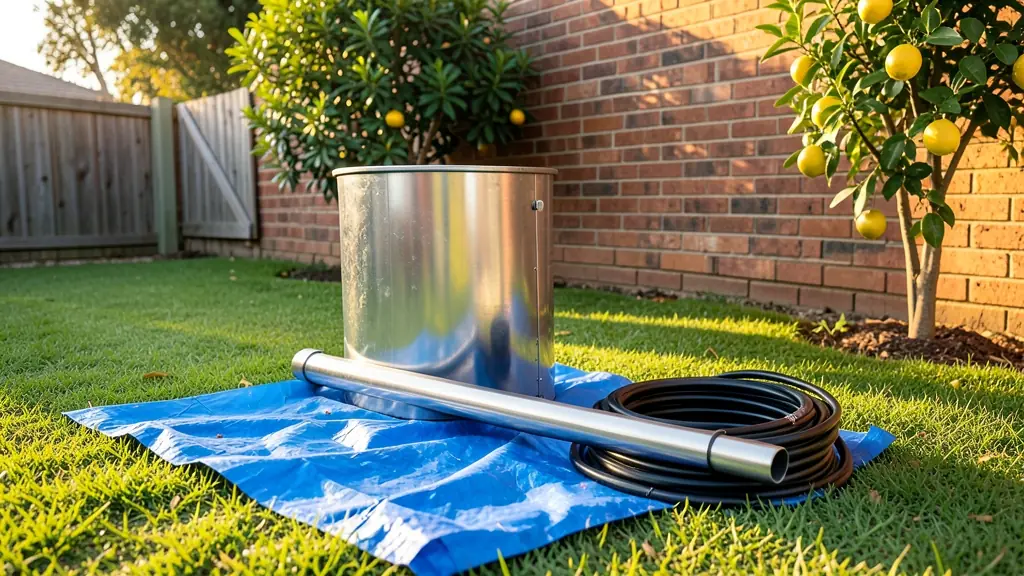
A submersible pump is a pump and a sealed electric motor built as one unit that works under water. Because it sits in the water and pushes it up the pipe instead of sucking it, it can lift from deep boreholes, runs quietly and never needs priming. That is why most boreholes, many tanks, sumps and sewage pits use one. This page explains how a submersible differs from a surface water pump, the main kinds, how pumps are sized, and how to compare the quotes that independent pump suppliers and installers send you.
Submersible pump or surface water pump?
A surface pump, such as a centrifugal, jet or booster pump, sits on dry ground and sucks water from a tank, river or shallow well. In practice suction lift is limited to about 7 to 8 m, so water deeper than that needs a submersible pump down in the water. Surface pumps are easier to reach and service; submersibles are quieter, cannot lose their prime and handle depth. Many homes use both: a submersible fills a tank from the borehole and a booster sends tank water to the house. If your water sits in a tank at ground level, either can work; the choice comes down to noise, space and how easy you want servicing to be.
The main kinds
- Water supply: borehole pumps, deep well pumps for very deep holes, solar borehole pumps and irrigation pumps.
- Tanks and pressure: tank pumps with pressure tanks.
- Getting rid of water: drainage, sump, sewage, dewatering and slurry pumps.
- Around the house: pond and fountain pumps.
Sizing by flow and head
Two numbers choose the pump. Flow is how much water you need, in litres per hour or m³/h. Total head is the height the pump must push against, in metres: the depth to the pumping water level, plus the height to the tank or highest tap, plus friction in the pipe, plus the pressure you want at the end (1 bar is about 10 m). The supplier reads the pump curve to find a model that gives your flow at your head.
For a borehole, never size the pump bigger than the yield test allows. A pump that draws more than the hole gives runs dry and burns out.
Power, price and comparing quotes
Domestic pumps are often 0.37 kW to 2.2 kW on single phase; larger pumps on farms and in industry run on three phase. Single phase pumps come as 2 wire (start gear in the motor) or 3 wire (with a control box above ground).
The price depends on the motor size, the number of stages, stainless or plastic parts, and what comes with it: cable and pipe, the control box, protection and installation. Ask every supplier for the duty point (flow at head), the motor kW and phase, and a list of what is included. Two quotes for "a 1.1 kW pump" can deliver very different flow at your head, so compare duty points, not motor sizes.
What to put in your request
- What the pump is for: borehole, tank, sump or pit
- Depth to the water and height to the tank or house
- The flow you need and the pressure at the taps
- Single phase or three phase power on site
- The yield test or the old pump's details, if any
Submersible Pumps for homes, farms and businesses
- Homeowners: a borehole pump for the garden or a pump to send tank water to the house
- Smallholdings and plots: one borehole pump for the house, the animals and the vegetable garden
- Farms: borehole and dam pumps for livestock water and irrigation, often on three phase
- Complexes, estates and body corporates: communal borehole pumps, storm water sumps and sewage pumps for the complex
- Offices, shops, hotels and lodges: basement sumps, backup water pumps and pressure sets for offices, hotels and schools
- Factories, plants and depots: process water from boreholes, effluent sumps and wash bay pits at plants and depots
- Mines and quarries: dewatering pumps for pits and shafts and slurry pumps for settling ponds
- Municipalities, schools and clinics: village borehole pumps, sewage lift stations and pumps for flooded roads
- Contractors and drillers: pumps for new boreholes, trench dewatering on site and installs for clients
Frequently asked questions
Is a submersible pump the same as a water pump?
How long does a submersible pump last?
Can I use a borehole pump in a tank or a pit?
Do you sell or install pumps yourselves?
Submersible Pumps by province and city
- Johannesburg
- Pretoria
- Centurion
- Midrand
- Sandton
- Randburg
- Roodepoort
- Krugersdorp
- Randfontein
- Germiston
- Boksburg
- Benoni
- Kempton Park
- Alberton
- Vanderbijlpark
- Vereeniging
- Durban
- Pinetown
- Pietermaritzburg
- Richards Bay
- Newcastle
- Ladysmith
- Gqeberha (Port Elizabeth)
- East London
- Kariega (Uitenhage)
- Mthatha
- Cape Town
- Bellville
- Paarl
- Stellenbosch
- George
- Worcester
- eMalahleni (Witbank)
- Middelburg
- Secunda
- Mbombela (Nelspruit)
- Rustenburg
- Brits
- Klerksdorp
- Potchefstroom
- Mahikeng
- Polokwane
- Tzaneen
- Kimberley
- Upington
- Bloemfontein
- Welkom
- Sasolburg