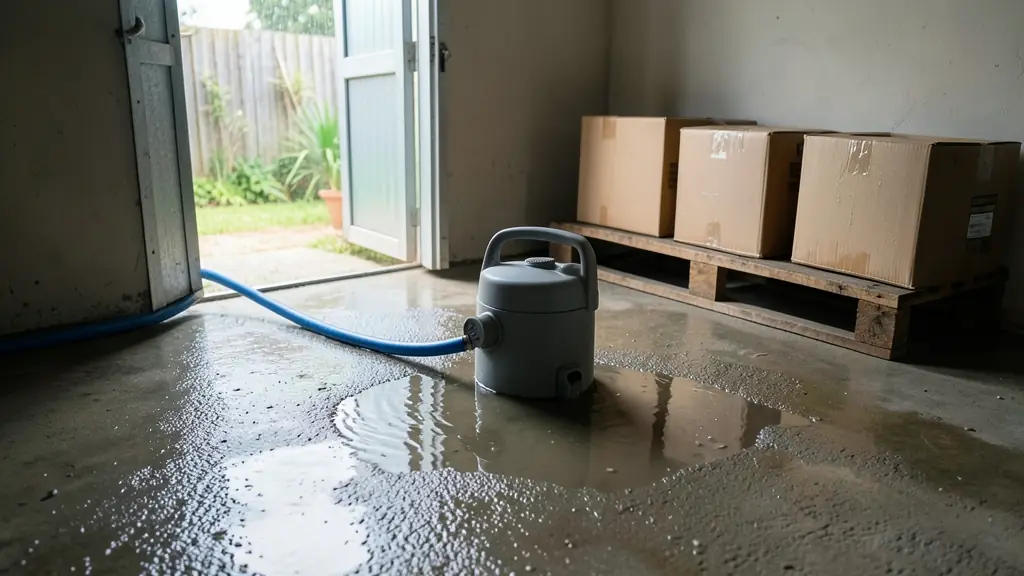
A drainage pump is the portable submersible you drop into water that should not be there: a basement after a Highveld thunderstorm, a garage that floods every summer, a pool that needs emptying, a pond being cleaned or a tank that must be drained. You put it in the water, run a hose to a drain or the garden, and switch it on, or let a float switch do that for you. Tell us how much water you have and where it must go, and we pass your request to independent pump suppliers and hire companies nearby, who quote you directly.
Clean water or dirty water
Drainage pumps come in two broad kinds. A clean water pump has narrow passages and pumps clear or slightly cloudy water, such as rainwater, a pool or a tank, and can often drain down to a few millimetres. A dirty water pump has a larger opening and a sturdier impeller to pass small solids, often up to about 25 to 35 mm, such as leaves, silt and grit. Neither is made for sewage: for toilet waste you need a sewage pump, and for thick mud a slurry pump.
Float switches and automatic use
A float switch on a short cable rises with the water and starts the pump, then drops and stops it before the pump runs dry. This lets a drainage pump stand guard in a garage pit or a low corner of a basement. Some pumps have the float built in. Check how much water must gather before the pump starts, and keep the float free to move: a float jammed against a wall is a common reason a pump fails to start. A pit built for the job becomes a sump pump setup.
How to size one
Work out the volume first: length x width x depth of the water, in metres, gives cubic metres, and each cubic metre is 1,000 litres. Then decide how soon it must be gone. The pump's flow drops as the height and hose length grow, so look at the pump curve at your lift, not the maximum flow on the box.
- Flooded basements and garages
- Draining swimming pools and ponds
- Storm water and rainwater sumps
- Emptying water tanks for cleaning
Hoses, power and care
Most portable pumps run on single phase power and connect to a lay-flat hose or a garden hose adapter. Use a plug point with earth leakage protection, keep the plug and any extension lead out of the water, and never lift the pump by its cable. Rinse a dirty water pump in clean water after use so silt does not set around the seal. For one big job you may be better off with pump hire than buying.
What to put in your request
- Where the water is and how it got there
- Rough size: length, width and depth of water
- Clean water or water with silt and leaves
- How high and how far the hose must run
- Buy or hire, and whether a float is needed
Drainage Pumps for homes, farms and businesses
- Homeowners: a flooded basement, garage or low patio pumped out after a heavy thunderstorm
- Smallholdings and plots: water tanks, troughs and small ponds emptied for cleaning with a portable pump
- Farms: flooded cellars, pits and low sheds drained after summer storms
- Complexes, estates and body corporates: storm water pits and flooded parking bays cleared by the maintenance team
- Offices, shops, hotels and lodges: basement parking, lift motor rooms and plant rooms drained after a burst pipe
- Factories, plants and depots: wash bays, drainage pits and loading docks pumped clear of rainwater
- Mines and quarries: small pits and workshop floors drained between heavier dewatering jobs
- Municipalities, schools and clinics: flooded underpasses, culverts and low roads cleared after storms
- Contractors and drillers: rainwater pumped out of footings and service trenches between pours
Frequently asked questions
Can I use a drainage pump to empty my pool?
How deep must the water be for the pump to work?
Can a drainage pump run all the time?
Do you sell drainage pumps?
Drainage Pumps by province and city
- Johannesburg
- Pretoria
- Centurion
- Midrand
- Sandton
- Randburg
- Roodepoort
- Krugersdorp
- Randfontein
- Germiston
- Boksburg
- Benoni
- Kempton Park
- Alberton
- Vanderbijlpark
- Vereeniging
- Durban
- Pinetown
- Pietermaritzburg
- Richards Bay
- Newcastle
- Ladysmith
- Gqeberha (Port Elizabeth)
- East London
- Kariega (Uitenhage)
- Mthatha
- Cape Town
- Bellville
- Paarl
- Stellenbosch
- George
- Worcester
- eMalahleni (Witbank)
- Middelburg
- Secunda
- Mbombela (Nelspruit)
- Rustenburg
- Brits
- Klerksdorp
- Potchefstroom
- Mahikeng
- Polokwane
- Tzaneen
- Kimberley
- Upington
- Bloemfontein
- Welkom
- Sasolburg