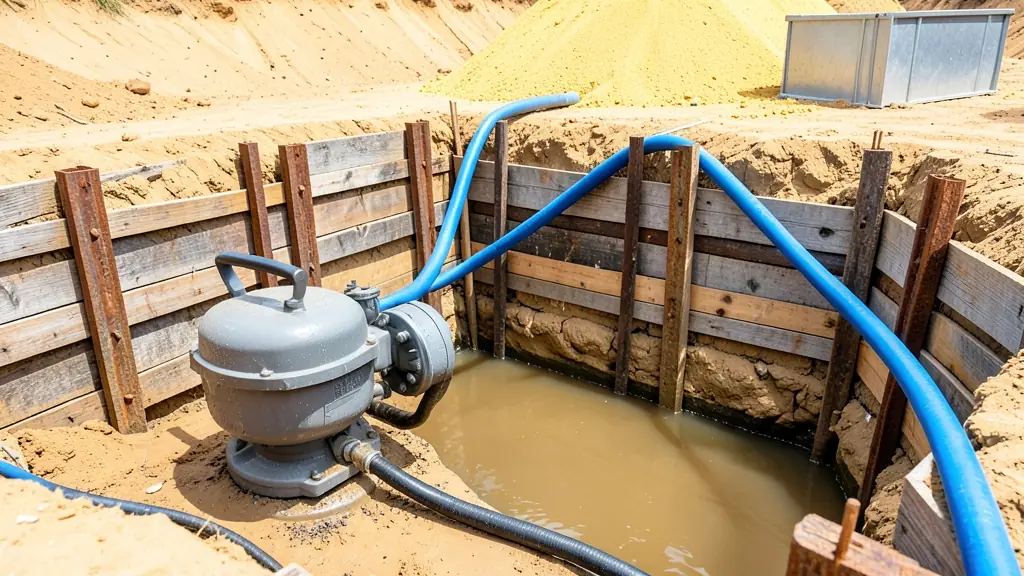
A dewatering pump keeps an excavation, trench, foundation, pit or mine working dry so the work can carry on. On a building site near the coast the water may seep in from a high water table; on a Highveld site it often comes from a summer storm; in a mine it is groundwater that never stops. The right answer may be one heavy submersible, several pumps, or a wellpoint system that lowers the water before you dig. Describe the site and we pass your request to independent pump suppliers and hire companies who work in your area, and they quote you directly.
Submersible dewatering pumps
The workhorse is a heavy submersible pump with a hardened impeller and a strong casing, placed in the lowest point of the dig or in a small sump with gravel around it. These pumps are made to run for long hours and to pass some sand and grit, and the larger ones are often three phase. Where the water carries a lot of mud or settled solids, a slurry pump with an agitator may suit better. For short jobs with clean water, a portable drainage pump can be enough.
Wellpoints in sandy ground
In loose sand with a high water table, such as parts of Durban, Richards Bay and the Cape Flats, pumping from the bottom of the trench often brings the sides in. A wellpoint system works differently: a line or ring of small well points is jetted into the ground around the dig and joined to a header pipe and a vacuum assisted pump. It draws down the water table before and during the excavation, so the sand stays firm. A contractor or hire company sets the spacing and depth for the ground.
Power, diesel and running costs
Electric pumps need a supply on site, often three phase from a generator or a temporary connection. Where there is no power, a diesel driven pump on a trailer is common, and some sites keep one as standby during load-shedding. Ask how often the pump needs fuel and checks, and who refuels it over weekends.
- Trenches for pipes and services
- Basement and foundation excavations
- Mine pits, shafts and sumps
- Flooded quarries and dams being emptied
Hire or buy
Most building contractors hire dewatering pumps for the length of the job, with hoses, delivery and collection, which our pump hire page covers. Mines, quarries and long civil projects often buy, because the pumps run for years. Ask for the pump's flow at your actual lift, and where the water may be discharged: silty water into a storm water drain may need a settling tank first.
What to put in your request
- What is being dug and how deep
- The ground: sand, clay or rock
- How fast the water returns after pumping
- Power on site, or diesel needed
- How long the pumps are needed for
Dewatering Pumps for homes, farms and businesses
- Homeowners: a deep pool or basement excavation kept dry while the shell is built
- Smallholdings and plots: a new dam wall or trench drained during earthworks after rain
- Farms: a flooded dam basin or irrigation trench pumped out for repairs
- Complexes, estates and body corporates: service trenches and foundations kept workable during a new phase of building
- Offices, shops, hotels and lodges: basement excavations for offices and malls held dry through the summer rains
- Factories, plants and depots: pits for new plant, tanks and machine bases kept dry during construction
- Mines and quarries: open pits, shafts and underground sumps pumped around the clock
- Municipalities, schools and clinics: pipe and sewer trench work in high water table areas drawn down with wellpoints
- Contractors and drillers: hired pumps and wellpoints for trenches, footings and pipelines
Frequently asked questions
How do I know how big a dewatering pump I need?
What is the difference between a wellpoint pump and a normal dewatering pump?
Can dewatering pumps run during load-shedding?
Do you hire out or install dewatering equipment?
Dewatering Pumps by province and city
- Johannesburg
- Pretoria
- Centurion
- Midrand
- Sandton
- Randburg
- Roodepoort
- Krugersdorp
- Randfontein
- Germiston
- Boksburg
- Benoni
- Kempton Park
- Alberton
- Vanderbijlpark
- Vereeniging
- Durban
- Pinetown
- Pietermaritzburg
- Richards Bay
- Newcastle
- Ladysmith
- Gqeberha (Port Elizabeth)
- East London
- Kariega (Uitenhage)
- Mthatha
- Cape Town
- Bellville
- Paarl
- Stellenbosch
- George
- Worcester
- eMalahleni (Witbank)
- Middelburg
- Secunda
- Mbombela (Nelspruit)
- Rustenburg
- Brits
- Klerksdorp
- Potchefstroom
- Mahikeng
- Polokwane
- Tzaneen
- Kimberley
- Upington
- Bloemfontein
- Welkom
- Sasolburg