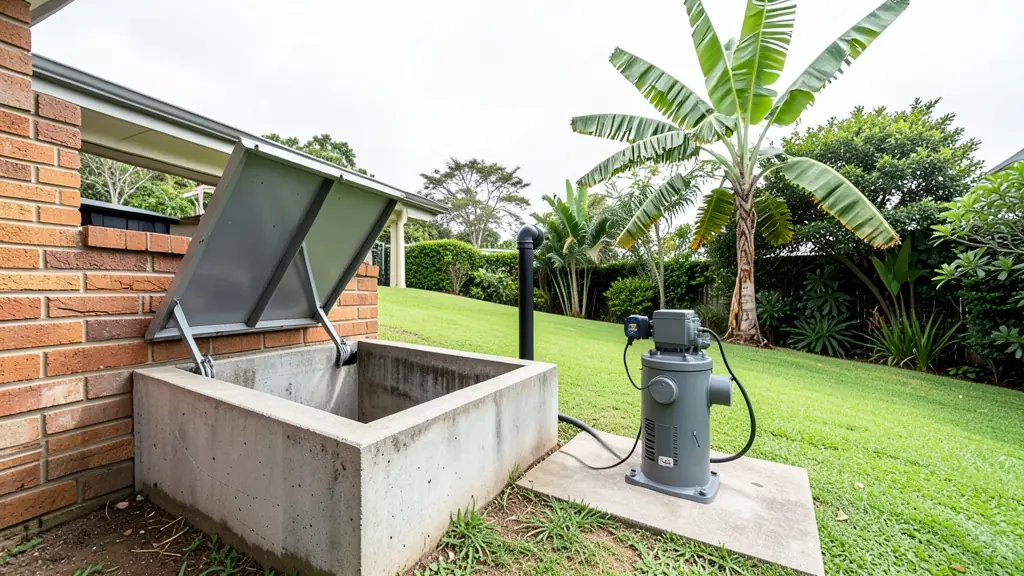
A sewage pump earns its keep where gravity will not do the job: a granny flat below the street, a basement toilet, a lodge far from the municipal line, or a house on a slope where the sewer connection is higher than the bathroom. The pump sits in a sealed chamber, waits for the level to rise and pushes the waste up a pipe to the sewer or septic system. It must be built for solids, rags and grit, not just water. Tell us what the pump must handle and we pass your request to independent pump suppliers and drainage contractors near you, who quote you directly.
Vortex or cutter impeller
Two impeller designs do most of the work. A vortex impeller sits back in the casing and spins the water into a whirlpool, so solids pass through without touching the vanes. It is hard to block and handles grit well. A cutter or grinder impeller chops solids into a slurry, which lets it push waste through a smaller pipe over a longer distance or a greater height. A clean water drainage pump is not a substitute: its narrow passages block with the first wipe, and the motor overheats.
The chamber, floats and alarm
The pump stands in a chamber or sump that collects the waste. Float switches start the pump when the level rises and stop it before the chamber runs dry, and a separate high level float rings an alarm or lights a lamp if the pump fails. A non-return valve on the outlet stops the rising main draining back. Bigger jobs, such as an estate or a school, usually need a two pump set with a panel, which our page on sewage pump stations covers.
- Basement toilets and showers
- Granny flats and cottages below the sewer
- Lodges, farm houses and remote buildings
- Wash bays and kitchens with a grease trap ahead of the pump
Sizing: flow, head and the pipe
The installer looks at how many toilets, basins and showers feed the chamber, how high the waste must be lifted and how far the pipe runs to the connection. Like any pump, a sewage pump is set by its flow at a total head, and long or narrow pipes add friction. Single phase pumps suit most homes; larger lifts and commercial buildings often run three phase. Mains wiring and the float circuit should be done by a qualified electrician, and you can ask for a Certificate of Compliance.
What kills sewage pumps
Wet wipes, sanitary products, nappies, cooking fat and rags are the usual culprits. They wrap around impellers, jam floats and trip the motor. Keep a bin in every bathroom and tell tenants and guests. A service every few months, more often in busy buildings, should include lifting the pump, clearing the impeller, checking the floats, the valve and the cable, and hosing the chamber walls. A pump that keeps tripping may also have a worn seal or a burnt winding, which a pump repair workshop can test.
What to put in your request
- What drains to the pump: toilets, showers, kitchen
- The height from the chamber to the sewer pipe
- The pipe length to the connection
- Whether a chamber exists or must be built
- Single or three phase power, and any backup
Sewage Pumps for homes, farms and businesses
- Homeowners: a basement bathroom or granny flat below the street sewer pumped up to the connection
- Smallholdings and plots: a cottage or farm house waste lifted to a septic system on higher ground
- Farms: staff housing and ablutions far from the main line served by a single sewage pump
- Complexes, estates and body corporates: a clubhouse or low lying units pumped into the estate sewer network
- Offices, shops, hotels and lodges: lodges, restaurants and basement ablutions with pumps sized for heavy daily use
- Factories, plants and depots: wash bays and ablution blocks with grit and grease passed through vortex pumps
- Mines and quarries: change houses and offices at remote shafts pumped to a treatment works
- Municipalities, schools and clinics: small lift points in low streets feeding waste into the gravity network
- Contractors and drillers: sewage pumps supplied and set in new chambers as part of a building contract
Frequently asked questions
Can a sewage pump handle toilet waste?
What happens to a sewage pump during load-shedding?
How do I know my sewage pump is failing?
Do you supply or fit sewage pumps yourselves?
Sewage Pumps by province and city
- Johannesburg
- Pretoria
- Centurion
- Midrand
- Sandton
- Randburg
- Roodepoort
- Krugersdorp
- Randfontein
- Germiston
- Boksburg
- Benoni
- Kempton Park
- Alberton
- Vanderbijlpark
- Vereeniging
- Durban
- Pinetown
- Pietermaritzburg
- Richards Bay
- Newcastle
- Ladysmith
- Gqeberha (Port Elizabeth)
- East London
- Kariega (Uitenhage)
- Mthatha
- Cape Town
- Bellville
- Paarl
- Stellenbosch
- George
- Worcester
- eMalahleni (Witbank)
- Middelburg
- Secunda
- Mbombela (Nelspruit)
- Rustenburg
- Brits
- Klerksdorp
- Potchefstroom
- Mahikeng
- Polokwane
- Tzaneen
- Kimberley
- Upington
- Bloemfontein
- Welkom
- Sasolburg