
Root causes of submersible pump trips
Electrical faults and overloads
Power and water share a stubborn truth in South Africa: even the best submersible pump can trip when electrical conditions wobble. A surprising portion of interruptions traces back to the electrical fault and overload family, where a surge or imbalance sneaks past the guard before anyone notices.
Electrical faults and overloads set a timer on momentum. Voltage dips, spikes, or phase loss rattle windings and provoke protective devices to trip. Overloads creep in during starting, or when the pump fights heavy head pressure, forcing the system to bow out to prevent damage. This illustrates why submersible pump trip occurs in many SA installations.
Common electrical culprits include these factors:
- Voltage spikes and sags
- Phase loss or imbalance
- Insulation deterioration in windings
- Faulty or undersized conductors
Overheating and thermal protection triggering
In the still depths where motors hum, heat becomes a sly saboteur. When a submersible pump overheats, the thermal protection springs to life and halts the machinery. This sheds light on why submersible pump trip happens, especially in SA where ambient warmth and heavy water loads push components toward the limit.
Root causes lie in the warmth pathway: restricted cooling, longstanding wear, and water-starved seals.
- Inadequate heat dissipation due to low water flow
- Dry-running or poor lubrication increasing friction
- Debris or silt clogging intakes and heat exchangers
- Faulty or slow-reacting thermal sensors
These factors, when combined, create moments where the quiet pump tramps to a stop, preserving itself at the cost of uptime.
Blockages and reduced suction leading to cavitation
“Blockages are the silent killer of pumps,” a field technician often warns. Blockages and reduced suction set the stage for trips. In South Africa, silt, debris, and reeds cling to screens, while corroded seals tighten the choke on flow. When suction falters, pressure inside the impeller drops and cavitation forms—snapping the pump into a safe shutdown. This dynamic helps explain why submersible pump trip occurs in real-world conditions.
- Debris, silt, and algae clogging intakes and filters
- Stuck screens and reduced water supply that lower suction head
- Air leaks or fast water draw causing air entrainment and cavitation
- Suction pipe kinks or elevated lift increasing the load on the pump
Blockages and reduced suction corner the pump into a tight spot. Cavitation accelerates wear, and the system trips before damage spreads. With silts and variable water flow common in SA, these forces push the equipment toward a stop, illustrating the root cause pattern without treading into unrelated faults.
Air locks and priming problems
SA field crews know well that air can be the pump’s worst enemy. In field reports, roughly 28% of unplanned outages trace to suction air—yes, the dramatic culprit hiding in plain sight. So, why submersible pump trip? The short answer is air locks and priming problems.
Air locks happen when air pockets hitch a ride in the suction leg or at the inlet, starving the pump of a steady feed. Without a reliable prime, the system stalls as pressure drops and the pump shuts down before fish come up the line.
- Inadequate priming and lingering air pockets in the suction line
- Leaks in seals or connections letting air seep in
- Ventilation issues or high points in piping that trap air
These subtle faults creep in quietly and remind us that even a submersible pump wants a clear throat and a primed heart.
Grounding issues and short circuits
So, why submersible pump trip? Grounding issues and short circuits are often the quiet triggers. When the pump’s frame isn’t properly earthed, stray currents seek paths through insulation and trip the protection before the flow stabilises. In South Africa’s field sites, dusty, damp conditions corrode connections and loosen earth bonds, turning a steady feed into a sudden halt. The result is a quiet alarm in the control room and a pump that stops while demand climbs.
Root causes include several small faults:
- Inadequate grounding conductor or poor bonding
- Damaged insulation exposing current to the frame
- Loose terminals at the motor, junctions or pump housing
- Faulty protective relays that trip on minor ground faults
These faults creep in quietly and explain why submersible pump trip happens, echoing through the borehole and pump house alike.
Diagnostic steps for identifying pump trips
Visual inspection and sensor data review
Across South Africa’s industrial sites, downtime costs loom large, with pump trips eating into production lines. Understanding why submersible pump trip occurs isn’t about blame—it’s about listening to the machine’s language. Diagnostic steps begin with a careful visual inspection and a sober review of sensor data, letting truth rise from the noise and haste.
Visual inspection and sensor data review are twin rails on the same track.
- Visual cues: debris, wear, leaks, or unusual bearing noise observed on case and seals.
- Sensor data patterns: current draw, voltage, pressure, and vibration trends that diverge from expected profiles.
- Contextual factors: operating flow, head, and temperature conditions that frame the data you see.
From these observations, the narrative unfolds—the data speaks when we listen, and the human touch keeps interpretation honest.
Electrical testing and insulation checks
On South Africa’s factory floors, downtime costs operators an average of 5% of yearly uptime. In many plants, pump trips shave hours from production and cast long shadows over the day’s yield. The key question rises like steam from a kettle: why submersible pump trip?
Diagnostic steps begin with electrical testing and insulation checks. I lean close to the motor, listening as the windings murmur; I measure insulation resistance, verify winding continuity, and confirm grounding paths are sound.
To structure the inquiry, consider these checks:
- Insulation resistance assessment using a megohmmeter to uncover moisture and leakage.
- Verification of winding and conductor resistance against nameplate data for anomalies.
- Continuity checks on isolation between windings and the frame to flag stray paths.
- Evaluation of cable condition, moisture ingress, and temperature sensor accuracy.
With data in hand and trained intuition, I translate the trip’s language, guiding maintenance toward the next fix.
Flow, head, and performance testing
Factory floors across South Africa feel the cost of downtime, with uptime losses often around 5%. A single submersible pump trip can ripple through a shift and drag the day’s yield downward. This section explains why submersible pump trip happens and how to read the signals!
Diagnostic steps, I focus on flow, head, and performance to read the trip’s telltales.
- Flow check: compare actual discharge with the expected, noting deviations.
- Head verification: measure head at the present operating point.
- Performance test across loads: record flow, head, and motor current against the curve.
These readings turn numbers into a concise picture of why the trip occurred—the story the plant can work with.
Analyzing protective devices and trip histories
Downtime costs South African plants about 5% of annual output, and a single submersible pump trip can derail a shift. When current collapses, the question arises: why submersible pump trip? The diagnostic journey begins with listening for signals that survive the outage and point to the cause.
Diagnostic steps center on protective devices and trip histories. I search for patterns in alarms, interlocks, and recorded events. This approach turns chaos into a readable narrative for maintenance teams.
Key areas to examine include:
- Trip history analysis and fault codes from logs
- Protective-device statuses and interlock configurations
- Event correlation with plant notes and sensor trends
These reflections reveal why submersible pump trip occurs, helping the plant restore rhythm with quiet confidence.
Interpreting pump start stop patterns
Downtime costs South African plants about 5% of annual output, and a single submersible pump trip can derail a shift. Diagnostic focus centers on start-stop behavior. Analyzing start-stop sequences shines a light on why submersible pump trip events occur. Patterns emerge quickly!
- Start/stop cadence and restart timing
- Alarm codes and interlock state alignments
- Event timestamps vs plant notes and process trends
These observations map a readable narrative for maintenance teams, helping to trace root causes without guesswork.
Preventive measures to avoid future trips
Routine maintenance and component replacement
A well-tuned maintenance routine is the difference between a humming plant and a sudden halt. Understanding why submersible pump trip happens is the first line of defence against downtime. Catch wear early, keep sensors alert, and maintain prime in the sump. A few disciplined checks turn potential crises into mere footnotes in your production diary.
Routine maintenance and component replacement are the reliable quietists of your operation. To keep the pump behaving, schedule regular care and swap out worn parts. Consider these preventive steps:
- Scheduled seal and bearing inspections with documented results
- Timely replacement of wear-prone components (seals, impellers, bearings)
- Regular cleaning of suction lines and priming checks
With modest tools and steady discipline, the submersible will perform—quietly, reliably, and with a touch less drama.
Correct sizing, installation, and alignment
Across South Africa’s waterworks and industrial sites, uptime is currency and downtime a costly shadow. Unplanned trips shave days from production; some facilities report up to a 30% productivity gain when trips are curtailed. This frames why submersible pump trip avoidance matters: it rests on the art of correct sizing, careful installation, and steadfast alignment.
- Sizing considerations: match the pump curve to the expected flow and head, factoring suction lift, viscosity, and future demand to avoid undersizing or oversizing.
- Installation realities: ensure proper orientation, robust piping, and secure electrical connections to minimize vibrations and thermal stress.
- Alignment integrity: verify coaxial alignment between pump and motor, with suitable couplings and minimal runout to protect seals and bearings.
With these high-level guardrails, the system can run with a quiet confidence—reliable and ready for the next challenge that South Africa’s terrain may throw at it. When the fit is right and the components agree, the plant hums with a steadier, more predictable rhythm.
Suction line management and filtration to prevent air ingress
Guarding against repeat trips begins at the suction node. Air seeping into the line disrupts flow, the pump hesitates, then trips—an unwelcome tempo in a site that relies on constant pressure. This is why submersible pump trip matters, and prevention starts with a tidy, airtight suction path.
Preventive measures focus on suction line management and filtration to prevent air ingress. Ensure the suction run is continuous, with clean flanges and stable supports, and minimize leaks in joints. The installation should feature air-release valves at high points and gaskets that deter micro leaks. Inline filtration helps remove particulates that can disrupt flow and invite air.
- airtight seals and robust joint integrity
- air-release valves positioned at high points for venting
- clean inline filtration to minimize solids entering the suction
With these practices, the system breathes easier, reducing the odds of unnecessary trips in South Africa’s demanding environments.
Vibration monitoring and mechanical integrity
South Africa’s demanding pumping environments don’t forgive whimsy. When a submersible hiccups, uptime vanishes and production slows. Vibration-related issues drive up to 40% of unplanned pump trips, underscoring why submersible pump trip matters and how vibration control keeps flow steady.
Vibration monitoring turns guesswork into trend data. Baselines spotlight rotor imbalance, bearing wear, and loose parts before they become dramatic faults.
- Vibration signatures reveal mechanical health at a glance
- Spectral analysis spots changes against historical baselines
- Foundations, mounting, and bearing integrity shape the pump’s resilience
Focusing on mechanical integrity—solid foundations and secure mountings—helps keep pumps singing instead of tripping. In South Africa’s rugged conditions, that vigilance pays off in uptime and longevity.
Water quality, debris control, and environment considerations
Across South Africa’s rugged irrigation fields and mine sites, downtime can cost more than a day’s wage. In many cases, unplanned submersible pump trips begin with water quality slipping or debris sneaking into the intake, a silent thief of steady flow.
Water quality management might include pre-filters and turbidity monitoring, while debris control hinges on screens and clear suction paths. Debris screens at the pump nose reduce abrasive wear and suction losses. This highlights why submersible pump trip happens when the river of water goes murky.
- Intake screening designed for local sediment and debris profiles
- Silt management and intake trenches to dampen sand intrusion
- Protective enclosures and corrosion-resistant fittings to withstand SA’s climate
Site and climate shape risk; choose sheltered placements, adapt for seasonal silt, and finish with corrosion-resistant fittings.
Operational and financial impacts of pump trips
Downtime and production losses
Unplanned pump trips don’t just stop water flow; they stall momentum across the facility. In South Africa’s industries—mining, agriculture, municipal supply—downtime translates to real costs, sometimes thousands of rand per hour when production stalls and crews idle. The disruption isn’t limited to the moment of the trip; it reverberates through schedules, service contracts, and customer commitments.
Operational costs pile up as systems re-pressurize and operators scramble to restore steady flow. The following costs commonly accompany a trip:
- Downtime and lost production hours
- Startup surges and accelerated wear during re-energization
- Overtime and contractor costs to rectify the issue
- Maintenance, parts, and accelerated wear from rapid cycling
Viewed in total, the operational and financial footprints are hard to ignore. This is exactly why ‘why submersible pump trip’ matters for South Africa’s on-site teams, highlighting where reliability, monitoring, and aging infrastructure demand thoughtful attention in our demanding environments.
Maintenance costs and unexpected repairs
Operational and financial impacts of pump trips ripple far beyond the moment of a failure. In South Africa’s industries—mining, agriculture, municipal water—unplanned halts tighten budgets fast. A single trip can interrupt shift patterns, renegotiate contracts, and squeeze cash flow—downtime sometimes costs thousands of rand per hour. This reality fuels the question why submersible pump trip matters, especially when aging infrastructure is the undercurrent of every outage.
- Spare parts and seal kits that must be sourced urgently
- Field labor and overtime to reprime and test the system
- Diagnostics and servicing to restore reliability after rapid cycling
Viewed in total, these costs press on margins and contracts alike. Those hidden charges—parts, field labor, and diagnostics—pile up, especially where service levels are tight and delays propagate penalties. The bottom line is clear: maintenance costs and unexpected repairs ride in on the wake of every trip, shaping budgets and planning across South Africa’s critical water and power corridors.
Energy consumption during trip recoveries
Energy use spikes in the hour after a pump trip; in South Africa’s energy-intensive sites, recoveries can push electricity demand up by 20-40%. A submersible pump trip isn’t just downtime—it’s a surge in power draw as the system re-pressurizes, re-primes, and restarts. This is why submersible pump trip dynamics matter for budgets in SA’s water, mining, and agriculture sectors.
- Energy consumption during recovery can drive peak-rate charges and unexpected invoices on electricity bills.
- Recovery cycles hasten wear and testing, nudging maintenance intervals and spare-parts planning higher than usual.
Viewed across operations, the energy footprint of a quick trip compounds downtime costs and negotiates the terms of service with suppliers. In short, energy costs during recovery illuminate why submersible pump trip planning deserves attention from boardrooms to field technicians.
Safety, compliance, and risk management
Operational and financial consequences follow a submersible pump trip. In South Africa, a restart disrupts timelines and budget forecasts. This begs the question: why submersible pump trip occurs and how it is managed. Every restart tests the balance between uptime and maintenance spend, especially where water demand runs high.
Safety, compliance, and risk management are not afterthoughts. They shape response, documentation, and adherence to standards.
- Lockout and isolation procedures during maintenance
- Clear incident reporting and escalation routes
- Independent inspections and restart protocol audits
Financially, trips ripple through planning. Spare-parts logistics, maintenance windows, and insurer risk ratings shift when trip histories accumulate. A disciplined approach to risk management supports budget resilience and smoother supplier terms.
Advanced tools for submersible pump trip troubleshooting
Thermal imaging and vibration analysis
In South Africa’s water, mining, and agri sectors, a single submersible pump trip can derail operations for hours. Advanced diagnostics give field crews sharper eyes: thermal imaging and vibration analysis illuminate hidden causes without pulling pumps apart. Understanding why submersible pump trip occurs guides the effort toward root causes rather than chasing symptoms.
Thermal imaging and vibration analysis offer early-warning signals. The following insights highlight their impact:
- Thermal imaging pinpoints hotspots in windings, connections, and cables long before a trip.
- Vibration analysis reveals bearing wear, misalignment, unbalance, or rotor faults that presage a shutdown.
- Combining data accelerates root-cause diagnosis and guides targeted maintenance.
For South African facilities aiming uptime and safety, these tools bring clarity to asset health and guide maintenance planning with confidence.
Pressure, temperature, and flow sensors
In South Africa, a single submersible pump trip can suspend operations for hours, costing facilities up to millions in downtime and lost momentum. The meticulous trio of pressure, temperature, and flow sensors offers real-time clarity where guesswork used to reign.
- Pressure sensors track rising backpressure and early cavitation indicators.
- Temperature sensors monitor winding and bearing heat along key sections.
- Flow sensors verify suction and discharge consistency, catching partial blockages.
Understanding why submersible pump trip happens becomes an interrogative journey—these sensors help you separate symptoms from root cause and plan maintenance accordingly, a crucial advantage for uptime and safety in South African sites.
Remote monitoring and IoT dashboards
A single submersible pump trip can halt operations for hours in South Africa and cost millions in downtime. For facilities under pressure to keep momentum, every minute matters. Advanced tools are changing the game by shedding light on the causes, not just the symptoms.
Remote monitoring and IoT dashboards give real-time visibility across sites, with trend analysis, alert thresholds, and rapid fault isolation. This is foundational to understanding why submersible pump trip occurs and how teams can plan proactive maintenance instead of waiting for a surprise shutdown.
- Real-time dashboards across plants and boreholes
- Alarm-driven workflows that flag anomalies early
- Remote diagnostics to pinpoint faults before on-site checks
Electrical diagnostics and control panel audits
A single submersible pump trip can freeze a site in its tracks, and in South Africa that downtime can climb into millions. When the borehole stalls, production grinds to a halt, and every minute feels like a countdown to a bigger fault. This moment demands clarity: understanding the why submersible pump trip happens, not just treating the symptom, is the first step to regaining momentum.
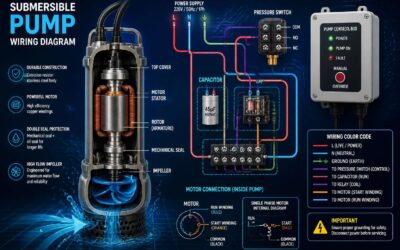
Advanced tools shift the balance from guesswork to evidence. Electrical diagnostics and control panel audits let technicians read the system’s heartbeat: wiring, relays, and protection schemes, without guesswork. This is how we move from reactive fixes to proactive insight, shedding light on the root causes rather than chasing shadows.
- Power quality analysis and waveform capture
- Relay and contact integrity assessment
- Control panel wiring audits and switchgear health checks
In South Africa, the right diagnostics preserve margins, uptime, and morale when the grid flickers and demand spikes.
Predictive maintenance analytics
Across South Africa’s energy-hungry sites, a single unplanned submersible pump trip can derail production faster than a grid outage. Advanced tools tilt the odds back in your favour, with predictive maintenance analytics that read the plant’s hidden rhythms, turning raw data into a map of reliability. Understanding why submersible pump trip occurs isn’t guesswork; it’s a disciplined conversation between sensors, history, and a keen eye for patterns that whisper trouble before the machine fails.
Here are the pillars that predictive maintenance analytics opens up.
- Early fault signaling through trend analysis
- Cross-system anomaly detection to flag outliers
- Strategic maintenance scheduling to minimize downtime
0 Comments