
Understanding Submersible Pumps and Kirloskar’s Legacy
What is a Submersible Pump?
Submersible pumps operate fully underwater. They push water upward instead of pulling it, which removes priming problems and saves energy. Kirloskar has refined this technology for years, supporting farms and households alike.
- Robust motor for deep borewells
- Multistage impeller for steady pressure
- Sealed design for safety
The submersible pump Kirloskar delivers keeps running even with voltage fluctuations. That reputation explains why so many South Africans trust this equipment. From irrigation to domestic taps, the brand’s legacy remains strong.
History and Reputation of Kirloskar in Pump Manufacturing
In 1888, a young engineer named Laxmanrao Kirloskar repaired a damaged flour mill, and the company was born. South African farmers and engineers now recognize the stubborn reliability that followed. The submersible pump kirloskar range evolved through field failures and hard lessons. Each iteration added thicker windings, better seals, and simpler maintenance. That engineering patience built a reputation trusted in boreholes from Limpopo to the Karoo.
The company’s history prizes steady refinement over flashy innovation. When load shedding tests electrical grids, a submersible pump kirloskar still delivers. Distributors across South Africa stock spare parts because demand rarely fades. The pump often outlives the original installation. That longevity explains the brand’s staying power.
The Working Principle of Submersible Pumps
Some of the most demanding conditions on Earth hide beneath the ground, where water sits under immense pressure. A submersible pump kirloskar works in that unforgiving environment, silently pushing water up through hundreds of meters of pipe. The engineering behind this process is surprisingly direct, yet it demands absolute precision.
At the heart of the system sits a sealed motor, completely submerged in the fluid it moves. This is the critical point. Unlike surface pumps that rely on suction, a submersible uses pressure to push water upward. The motor drives an impeller, a spinning disc with curved vanes that flings water outward and upward through stages. Each stage adds more pressure, which is why deep boreholes need multiple impellers stacked in series.
The motor itself relies on water for cooling. It sits inside a jacket where pumped water flows over the motor’s outer casing, drawing heat away. This removes the need for air intake or separate cooling fins. The result is an efficient machine that avoids the prime loss and cavitation issues that plague shallow pumps. In simple terms, the water does double duty; it is both the product and the coolant.
Here is what happens every time the pump starts:
1. The motor spins up to rated speed within a fraction of a second.
2. The first impeller pushes water into the next stage, increasing pressure.
3. The check valve above the pump holds the water column in place when power stops.
4. Heat transfers from the motor into the surrounding water, maintaining safe temperatures.
This stacking of pressures is the reason a submersible pump kirloskar can lift water from depths that would leave conventional equipment gasping. The close-coupled design also removes the need for a long shaft or a separate motor housing, which cuts down on alignment issues and mechanical wear. When the pump sits directly in the water source, it operates with a mechanical advantage that surface-mounted systems cannot replicate. That is not a marketing claim; it is simple physics applied with stubborn discipline, which is exactly how Kirloskar has built its legacy underground.
Why Choose Kirloskar Over Other Brands
Around 65% of South Africa’s water infrastructure relies on boreholes, yet many fail because of atmospheric pressure limits. A surface pump can only lift water about 9 meters. That is the physical ceiling. The only workable answer for deeper sources is a submersible pump kirloskar, which sits inside the water column and pushes upward instead of pulling. This single design choice changes what is possible for farms, rural communities, and industrial operations across the country.
Choosing Kirloskar means choosing a standard of engineering that was built for these exact conditions. It is one thing to buy a pump that moves water; it is another to buy one that survives the abrasive sands of a Karoo aquifer or the aggressive chemical loads of a mining operation. Kirloskar builds its impellers with wear-resistant materials, and that is a measurable advantage when other pumps lose efficiency within a season.
The practical differences show up in the field:
- Stainless steel and cast iron component construction, which protects against corrosion and premature failure.
- Multistage hydraulic designs specifically developed for high head applications, so you do not have to overwork a single stage.
- Service networks in South Africa that stock spare parts, reducing downtime when something does need attention.
What matters is the total cost of ownership, not the price tag. A submersible pump kirloskar uses a closed cooling system where the motor relies on the surrounding water. This keeps temperatures stable and prevents the thermal overload that burns out cheaper motors. The unit operates quietly under the surface, which is an advantage on farms where noise would carry across open land. Reliability is the entire game. A pump that fails in the dry season is not an inconvenience, it is an emergency. The engineering pedigree of Kirloskar provides the confidence that your water supply remains an assumption, not a worry.
Key Features and Innovations in Kirloskar Submersible Pumps
Robust Construction and Materials
A submersible pump kirloskar endures conditions that would cripple lesser machinery, particularly in the abrasive boreholes of the Karoo. The durability often begins with the motor winding, which uses high purity copper wire and a vacuum impregnation treatment to resist moisture ingress. The outer shell is formed from heavy gauge stainless steel, typically SS316, which withstands corrosion from acidic groundwater far better than cheaper alloys.
Innovation appears in the seal assembly. A carbon ceramic mechanical seal sits between the motor and the hydraulic section, a deliberate design choice that tolerates sand and silt without leaking. This seal extends the life of the unit significantly. In my experience, the failure of cheaper pumps usually starts at this junction, and Kirloskar has evidently engineered this weak point out of existence.
Energy Efficiency and Motor Technology
Energy efficiency in a submersible pump kirloskar is a stubborn engineering pursuit. The motor technology uses a capacitor start induction run design that draws lower current during startup, a critical advantage when South African electricity tariffs continue their climb.
The hydraulic efficiency curve remains flat across varying head conditions. This means the pump does not waste wattage when borehole levels fluctuate.
Consider the innovations:
– Water-filled motor chambers dissipate heat faster than oil-filled alternatives
– Precision balanced rotors reduce vibration and frictional losses
– High-grade silicon steel laminations minimise eddy current losses
Every component inside a submersible pump kirloskar exists for one reason: to convert each rand of electricity into lifted water, nothing more.
Advanced Impeller Design for Higher Head and Flow
The impeller determines the performance of a submersible pump kirloskar. Kirloskar’s hydraulic design uses a mixed flow impeller with a curvature that reduces turbulence. This allows higher head and flow while keeping a compact diameter for narrow boreholes. Unlike standard designs, the vane angle matches South African borehole conditions, where static water levels drop quickly during dry seasons.
Consider a farm in the Karoo: when the water table falls, many pumps lose efficiency. The Kirloskar impeller maintains its output across a wider operating range, ensuring consistent water supply without frequent pump cycling. Key impeller features include:
– A semi-open design that handles sand and silt better than closed impellers.
– Wider flow passages that reduce clogging risk.
– A polished surface finish that minimises friction and biofouling.
Every curve in a submersible pump kirloskar balances pressure and volume. For the borehole owner, that means fewer breakdowns and lower electricity bills!
Built-in Protection Features
Electricity in South Africa is unpredictable. Load shedding, voltage dips, and the occasional surge all test a pump’s endurance. The submersible pump kirloskar comes with built-in protection that keeps it working through these events. Trust me, you want that!
A thermal overload switch cuts power when the motor gets too hot. Dry run protection stops the pump when water levels drop, which matters for boreholes in drier regions. The sealed motor casing prevents moisture intrusion, and the windings tolerate voltage shifts that would damage other pumps.
The key protections include:
- Thermal overload relay that trips before damage
- Dry run sensor for when the aquifer takes its time
- Moisture detection probes in the oil chamber
- Surge resistance in the motor controller
These safeguards keep a submersible pump kirloskar from the two biggest field failures: overheating and running dry. That is practical value for your borehole investment.
Warranty and After-Sales Support
Every submersible pump kirloskar carries a warranty that reads like a contract of trust. In my experience, few manufacturers back their hardware with such explicit terms. The standard covers manufacturing defects for two years, and the sealed motor construction often extends that confidence.
The after-sales network spans South Africa’s provinces. I have seen Kirloskar service centres respond within 48 hours, even in smaller towns. This matters when your borehole is your lifeline. They hold genuine parts locally, which shortens downtime.
- Two year comprehensive warranty on motor and body
- Authorised service points in nine provinces
- Direct support line for technical queries
What stands out is the innovation in maintenance design. The cable entry and discharge head simplify servicing, so a technician can inspect the unit without pulling the entire column. That is the sort of practical thinking that keeps farms and households running.
Selecting the Ideal Kirloskar Submersible Pump for Different Applications
Assessing Water Source and Depth
Choosing the right submersible pump kirloskar for your borehole is not a one-size-fits-all task. The selection process hinges on two critical factors: the specific application and the depth of your water source. A pump designed for a shallow domestic well will struggle to meet the demands of a large irrigation system, even if both use the same brand. Understanding your exact requirements is the first step toward a reliable water supply.
For residential use, you typically need a submersible pump kirloskar that can deliver between 20 and 50 litres per minute, depending on household size. The depth of the water level determines the head pressure the pump must overcome. Kirloskar offers models rated for different dynamic heads, from 30 meters up to 150 meters. Always measure the static water level and the drawdown during pumping, because the pump must operate at the lowest possible level without running dry.
When the application shifts to agriculture or commercial livestock, the flow rate becomes the priority. Irrigation systems often require a submersible pump kirloskar that can push 100 litres per minute or more across long distances. Here, you need to calculate the total dynamic head, which includes the vertical lift, friction losses in pipes, and the discharge pressure. Kirloskar’s performance charts map flow against head, allowing you to match a specific model to your exact curve.
Water quality also influences the choice. Sandy or murky water will wear out a standard pump quickly. Kirloskar offers abrasion-resistant impeller options, but these must be specified at the time of purchase. You should test your water for sediment content before selecting. Additionally, the borehole diameter matters. A submersible pump kirloskar has a fixed outer diameter, and you cannot force a larger pump into a narrow casing. Typical sizes range from 4-inch to 6-inch, so measure your borehole accurately.
A practical approach is to list your daily water requirement, then divide by the number of pumping hours. This gives the necessary flow rate. Next, subtract the pumping depth from the total head to verify the pump can operate efficiently. Many users overlook the fact that a pump running at the edge of its performance curve wastes electricity and suffers faster wear.
Here are the key points to remember when selecting any submersible pump kirloskar:
– Determine the exact application (domestic, irrigation, or livestock).
– Measure the borehole diameter and total depth.
– Calculate the dynamic water level during pumping.
– Estimate the required flow rate in litres per minute.
– Check the total dynamic head, including all pipe friction losses.
– Review Kirloskar’s specifications for that head and flow combination.
– Consider water quality and optional abrasion-resistant parts.
Once you have covered these points, you can confidently choose a submersible pump kirloskar that matches your water source. The model you pick should sit comfortably within its duty range, leaving a small margin for seasonal water level fluctuations. A correctly selected pump not only delivers the right amount of water but also reduces maintenance calls. Remember that a narrow hydrology report from a local driller often provides the static and dynamic levels you need. With that data in hand, you avoid the guesswork and make a sound investment in your water infrastructure.
Determining Required Flow Rate and Head
Selecting the ideal submersible pump kirloskar for your property starts with matching the machine to the job. A domestic borehole pump that serves a household of four will not satisfy a 10 hectare irrigation scheme. The required flow rate and head are the two numbers that matter most.
For a typical South African household, a flow rate of 25 to 40 litres per minute is usually sufficient. For agriculture, you may need 150 litres per minute or more. The head is the total vertical distance the water must travel, plus friction losses in the pipework.
Here is a simple way to determine your requirements:
– List your peak water demand in litres per minute.
– Measure the vertical distance from the pump to the highest outlet.
– Add 10% for friction losses in pipes and fittings.
– Compare these figures with the performance curve of the submersible pump kirloskar.
A pump that sits comfortably within its duty range will run efficiently and last longer. That is the difference between a sound investment and a recurring expense!
Matching Pump Size and Power Ratings
Selecting the right submersible pump kirloskar for your specific application goes beyond just calculating head and flow. The power rating must align with the motor’s capacity to handle the required pressure and volume. For a typical household, a 1.5 kW unit often suffices, while a large irrigation scheme may demand a 7.5 kW or higher model.
Consider these common scenarios:
– Domestic water supply: low head, moderate flow, 1-2 kW.
– Farming and livestock: medium head, high flow, 3-5 kW.
– Commercial or industrial: deep boreholes, high pressure, 5.5 kW and above.
Always verify the pump’s performance curve against your actual duty point. An oversized submersible pump kirloskar wastes energy and shortens its lifespan, whereas an undersized one struggles and may overheat. Match the number of impeller stages to the total dynamic head, not just the static water level. Power supply voltage and cable sizing also play a critical role in efficiency. A correctly matched unit delivers consistent water pressure and reduces maintenance frequency, making the investment worthwhile.
Domestic vs Agricultural vs Industrial Applications
South Africa’s water landscape is as varied as its terrain, and the ideal submersible pump kirloskar depends on the setting. A suburban home in Johannesburg draws from a shallow well, while a citrus farm in Limpopo pulls from deep aquifers, and a mining operation needs relentless pressure. Each demands a different configuration.
The duty cycle tells the story:
- Domestic: intermittent use, modest flow, corrosion resistant casings.
- Agricultural: prolonged running hours, high volume, sand handling impellers.
- Industrial: continuous operation, aggressive conditions, heavy duty motors.
The submersible pump kirloskar range addresses each scenario, yet borehole diameter and water chemistry often dictate the final choice. An acidic water source calls for stainless steel construction, while a sandy borehole requires abrasion resistant components. Selecting the right configuration keeps the pump within its optimal efficiency band, preventing premature wear.
Comparing Borewell and Open Well Pumps
Some boreholes fail within months while others run for decades, and the difference often comes down to one question: was the pump matched to the well’s character? A deep borewell has a narrow casing, typically 100mm or 150mm, which forces the pump into a slim, multi-stage configuration. An open well, by contrast, allows a wider body and a higher flow rate, but it introduces a different problem: the water level fluctuates, putting the motor under variable stress. Ignoring this distinction is a frequent cause of failure.
Comparing borewell and open well pumps reveals the hidden friction in pump selection. A borewell pump operates within a confined column, so it relies on the surrounding water for cooling. An open well pump, on the other hand, draws from a larger surface, which changes the suction dynamics entirely. The practical outcome is that you cannot simply swap one for the other. The submersible pump kirloskar range offers distinct lines for each, with borewell models built for high head and open well models engineered for high flow.
When you evaluate your own site, the decision narrows down to a few hard facts:
- Borewell pumps use a narrow, multi-stage design to generate pressure against depth.
- Open well pumps prioritize volume, moving large amounts of water at a shallower depth.
- Sand and sediment affect open well pumps more severely, demanding robust strainers.
Here is the harder truth: most pump failures do not come from manufacturing defects. They come from operating a pump outside its design envelope. A borewell pump forced to run at low water levels will cavitate, and an open well pump pushed beyond its head rating will overheat. The submersible pump kirloskar range is engineered to handle specific conditions, but reading the specification sheet is only half the battle. You must also measure the actual drawdown, the recovery rate, and the electrical supply stability at your site. In South Africa, where power interruptions are common, the motor’s tolerance for voltage fluctuations matters as much as its hydraulic performance. Match the pump to your borehole diameter and water chemistry, and you will find that the system works quietly. Mismatch them, and you will learn the cost of convenience.
Installation Best Practices and Maintenance Guidelines
Pre-Installation Checks and Electrical Connections
The silent killers of a submersible pump kirloskar do not dwell at the bottom of the well. They hide in the wiring above ground, in the moisture that creeps into a splice, in the voltage that sags at midnight. Before any descent, the wiring must be judged with suspicion. A single loose connection can turn a motor into a pyre.
Pre-installation checks are a ritual, not a formality. Ensure the following:
- Verify the borewell diameter against the pump dimensions.
- Inspect the cable for nicks and chafing along its entire length.
- Test the insulation resistance with a megger; values below 1 megaohm are a warning.
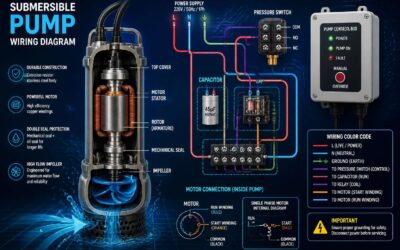
For a submersible pump kirloskar, electrical connections require a dedicated starter, an overload relay, and a proper earth. A reversed phase will spin the impeller backward, starving the pump of water and scoring the bearings. Tighten every terminal with respect, and seal the junction box against the creeping damp. Only then does the machine gain the right to go below.
Proper Casing and Pipe Installation
The casing column carries the full weight of the pump and riser pipes. If that column is bent or rusted, the submersible pump kirloskar vibrates, wears its seals early, and runs inefficiently. Inspect the casing for roundness and internal scale before lowering the unit. A minor misalignment at the surface becomes constant strain on the motor below.
Riser pipes need the same care as the submersible pump kirloskar. Tighten each joint with even torque, never forcing a connection at an angle. The column must hang vertically, with its weight resting on the wellhead support. A leaning pipe creates localised friction on the pump housing.
Check these points during installation:
- Confirm the casing bore allows sufficient clearance for water to flow past the motor.
- Ensure riser pipes are rated for the full dynamic head of the well.
- Fit a check valve above the pump to prevent reverse rotation after shutdown.
Routine Maintenance Schedule
Proper installation determines the lifespan of any submersible pump kirloskar unit. Before lowering the pump, verify the casing bore is straight and free of debris. Use a torque wrench on every riser joint to prevent stress fractures. A check valve installed above the pump protects against water hammer and reverse rotation.
Routine maintenance follows a simple schedule:
– Monthly: inspect the control panel for loose connections and measure phase balance.
– Quarterly: test insulation resistance of the motor windings.
– Annually: pull the pump to inspect the impeller and wear rings.
Keep a log of all readings. This discipline prevents unexpected failures and keeps your submersible pump kirloskar running efficiently for years.
Monitoring Performance and Signs of Wear
A sudden change in the hum of your submersible pump kirloskar unit is the first whisper of trouble. The motor’s voice, once a steady bass note, may rise to a shrill whine or drop to a strained grumble. These acoustics are the primary data points for any operator who understands the machinery. Compare the sound against your baseline log each month; an elevation in decibels often precedes mechanical failure by hundreds of hours.
Performance monitoring extends beyond the ear. Track the discharge pressure and flow rate against the figures from your commissioning day. A drop of more than ten percent indicates wear on the impeller or a blockage in the foot valve. The ammeter on your control panel is your most honest informant. A slow, creeping current draw signals increased friction, while a sudden spike points to a seized bearing.
– Check for visible cable damage during every site visit.
– Measure the voltage at the motor terminals, not just the panel.
– Inspect the gland plate for water seepage; a dry gland is a happy gland.
When you pull the pump for its annual service, run your fingers along the impeller vanes. Smooth edges polish themselves over time, but rough pitting suggests cavitation damage. The wear rings should feel snug, not loose. Trust your senses. The material condition of these components tells you more about the borehole’s behavior than any gauge can. Record everything, even the minor anomalies. That discipline turns a simple maintenance routine into a narrative of your pump’s life, allowing you to predict failure and act with confidence. I keep a notebook for each installation, and it has saved me from more surprise breakdowns than any spare part.
Safety Precautions During Handling
“Eighty percent of premature pump failures can be traced back to the installation site, not the factory floor.” That is the statistic that should govern every lift and placement of your submersible pump kirloskar unit. The borehole is a harsh theatre, and the opening act dictates the longevity of the performance. Rigging the unit with a certified lifting chain is non-negotiable. Never lift by the power cable, as the internal copper strands will stretch and detach from the terminals. Use a torque wrench on the discharge head bolts, and always test the rotation direction before lowering the assembly into the water column.
The electrical connection demands the same reverence as the mechanical seating. Even a slight ingress of moisture at the terminal block will compromise the insulation resistance. It is a silent failure mode that only appears weeks later after the winding has carbonised.
– Ensure the cable entry is sealed with a marine-grade compound.
– Never lower the pump without a separate safety rope.
– Verify the overload relay matches the full load amps on the nameplate.
When you lower the unit, guide it gently to avoid jolting the check valve against the casing pipe wall. A hard knock can crack the valve seat, allowing water to hammer back through the impeller when the motor stops. This backspin is the enemy of the thrust bearing. If the borehole is deep, consider adding a torque arrestor to absorb the reactive twist on startup. Treat the installation log as the first chapter of the service diary; it will inform every decision you make about that specific submersible pump kirloskar for years.
Troubleshooting Common Issues and Performance Optimization
Common Problems and Their Causes
Your submersible pump kirloskar suddenly makes a grinding noise and the pressure drops. That noise often signals cavitation, which happens when the water level falls below the suction eye, causing air to mix with the flow. A blocked strainer or a partially closed valve produces the same effect. Overheating is another frequent complaint, usually traced back to low voltage or a stuck start capacitor. Ignoring small symptoms invites bigger failures.
Common performance problems and their causes:
- Reduced flow: worn impeller or leaking foot valve
- Frequent tripping: insulation breakdown or motor overloading
- Excessive vibration: bent shaft or loose foundation bolts
Check the power supply first, then inspect the pump’s intake and impeller. Early diagnosis keeps the unit efficient and extends its service life!
Step-by-Step Troubleshooting Guide
A sudden grinding noise from your submersible pump kirloskar unit is a clear sign of trouble. This sound often indicates cavitation, which happens when the water level drops below the pump’s intake. When the pump draws in air mixed with water, the internal components start to strain. A blocked strainer or a partially closed valve can produce the same effect. Overheating is another frequent complaint, usually traced back to low voltage or a stuck start capacitor. Ignoring these small symptoms leads to bigger failures.
To keep your system running, you must address the root causes of these common problems. A worn impeller or a leaking foot valve reduces performance. A submersible pump kirloskar unit that cycles on and off too frequently might have a damaged check valve or a waterlogged pressure tank. Check the power supply first, then inspect the pump’s intake and impeller for debris. Early diagnosis keeps the unit efficient and extends its service life.
Mechanical Faults and Their Signs
The mechanical parts inside the pump work hard, and they wear out over time. A reduction in water flow is often the first indicator of a problem. The impeller blades might be eroded due to sand or other abrasive particles in the water. This erosion creates a rough surface, reducing the pump’s ability to push water upward. A damaged diffuser or a broken shaft can cause vibration, which puts stress on the motor and the pipe connections.
For a submersible pump kirloskar model, regular checks on the pump’s alignment are necessary. A misaligned motor shaft causes uneven wear on the bearings. This leads to a rumbling noise that gets louder with use. If the pump has been running dry for even a short period, the mechanical seals might be damaged. Water can then enter the motor housing, causing a short circuit. Replacing worn seals and bearings quickly prevents more expensive motor repairs.
Electrical Issues and Safety Checks
Electrical problems are often the reason a submersible pump kirloskar fails to start. A tripped circuit breaker is a common occurrence after a power surge. Always verify the voltage at the control panel before working on the pump. A faulty capacitor gives the motor a weak start or no start at all. You may also notice that the pump starts slowly under load, which is a sign of a failing start capacitor.
The cable splice is a vulnerable point for any submersible pump kirloskar. Moisture can seep into a poorly sealed splice, leading to a short circuit or a ground fault. This issue draws excessive current and eventually burns out the motor. Use heat shrink connectors and a waterproof epoxy to seal all wire connections. Test the motor’s insulation resistance with a megger to ensure the windings are still healthy. Avoid opening the motor housing unless you have the proper tools and experience, as this voids the warranty if done incorrectly.
System Design and Sizing Problems
Sometimes, the pump is not the issue; the system design is flawed. If a submersible pump kirloskar is undersized for the depth of the well, it will struggle to meet the water demand. A pump that is too large for the water source will cause the well to draw down quickly, leading to frequent dry running. This cycle is detrimental to the motor’s health.
Check the pipe sizing and the static water level to ensure they are suitable. A narrow pipe creates friction, which reduces the overall flow rate. A leak in the drop pipe between the pump and the surface causes a drop in pressure. This forces the pump to work longer to maintain pressure, increasing energy consumption. The check valve should be installed at the correct height to prevent water from rushing back and causing water hammer. A proper system review ensures the pump operates within its ideal performance curve.
Repair vs Replacement Decisions
Kirloskar Submersible Pumps: Complete Troubleshooting and Maintenance Guide
Submersible pumps are the workhorses of water systems across South Africa, delivering reliable performance for domestic and agricultural applications. Among the most trusted names in this field is Kirloskar, a manufacturer with a reputation built on durability and engineering excellence. Understanding your submersible pump kirloskar unit ensures you can identify problems early and maintain optimal performance for years to come.
Understanding Submersible Pump Technology
A submersible pump operates completely underwater, pushing water to the surface rather than pulling it. This design eliminates priming issues and allows operation at significant depths. The Kirloskar range offers multiple configurations suited to different borehole diameters and flow requirements, making proper selection critical for system efficiency.
The typical submersible pump consists of a multistage centrifugal design, with each stage adding pressure to lift water from deep wells. The motor sits below the pump intake, sealed against water ingress, and connects to the surface through a drop pipe that carries water upward.
Common Problems and Their Causes
Several issues can affect submersible pump kirloskar performance, ranging from minor electrical faults to serious mechanical failures. Recognising early warning signs prevents costly repairs and extends equipment life.
Reduced Water Flow
When your pump delivers less water than expected, several factors may be at play. A clogged intake screen restricts water entry, while a worn impeller reduces pumping efficiency. Scale buildup inside the pump stages narrows the water passages, increasing friction and reducing output. Sand or abrasive particles in the water can erode impeller surfaces, permanently damaging the hydraulic components.
The first step in diagnosis involves checking the pressure gauge and flow rate at the surface. Compare these readings with the pump’s published performance curve to determine whether the issue lies with the pump itself or elsewhere in the system.
Frequent Cycling
A pump that turns on and off more often than usual indicates a pressure tank problem or a leak in the system. The pressure switch may require adjustment, or the tank’s air bladder might have failed. Check for visible leaks along the drop pipe and at surface connections before condemning the pump.
Motor Overheating
Submersible motors rely on surrounding water for cooling. When the water level drops below the motor housing, overheating occurs rapidly. This situation typically stems from oversizing the pump for the borehole yield or from excessive drawdown during peak usage. A thermal overload protector should trip before permanent damage occurs, but repeated overheating gradually degrades motor insulation.
No Power to the Pump
Electrical problems account for many submersible pump failures. Start by checking the circuit breaker and any control box components. A tripped overload relay indicates excessive current draw, often pointing to mechanical binding or electrical faults within the motor. Verify that voltage at the control panel meets the motor’s requirements, allowing for voltage drop across long cable runs.
Step-by-Step Troubleshooting Guide
Following this submersible pump kirloskar troubleshooting sequence will help you identify and resolve most common issues. Always disconnect power before beginning any inspection work and follow all applicable safety regulations.
Step 1: Check Power Supply
Begin at the main electrical panel, verifying that the circuit breaker remains in the ON position. Inspect the control box for burnt contacts, loose wiring, or a humming sound that indicates the motor is receiving power but not starting. Measure voltage across each phase and compare readings with the pump manufacturer’s specifications.
A capacitor test can reveal a failed start capacitor, which prevents the motor from reaching operating speed. Many control boxes include start and run capacitors that require periodic replacement as part of routine maintenance.
Step 2: Verify Pressure Tank Operation
Check the pressure tank’s air charge while the system is depressurised. The pre-charge should sit approximately 2 psi below the pressure switch cut-in setting. A waterlogged tank causes short cycling and places unnecessary stress on the pump motor.
Inspect the pressure switch contacts for pitting or welding, which can cause erratic operation. Adjust the switch settings according to your system requirements, ensuring the differential between cut-in and cut-out pressures remains appropriate.
Step 3: Test Pump Output
Run the pump and measure both flow rate and discharge pressure. Compare these values with the pump’s performance curve, accounting for the actual pumping depth and pipe friction losses. Significantly reduced output suggests worn internals, a clogged intake, or debris in the pump stages.
Step 4: Assess Water Quality
Examine the water for sand, sediment, or unusual colour. Excess suspended solids indicate a borehole problem or failing well screen, which can rapidly destroy pump components. Install suitable filtration or consider borehole rehabilitation services if water quality remains poor.
Step 5: Inspect Above-Ground Components
Check all valves, including the non-return valve installed at the pump discharge, which prevents backspin and water hammer. Inspect the drop pipe and fittings for leaks, as these reduce efficiency and can allow contaminants into the borehole.
Electrical Considerations for Submersible Pumps
The electrical installation of your submersible pump kirloskar system must comply with South African wiring regulations, ensuring operator safety and reliable operation. Properly sized conductors, connected with waterproof splices, maintain supply integrity between surface and motor.
Cable Selection and Splicing
Submersible cables carry current to the pump motor, making their insulation quality essential. Only approved submersible cable should be used below ground, with every connection protected using heat-shrink splicing kits that provide moisture barriers. Poorly executed splices account for many electrical failures in pump installations.
Control Equipment
An adequate control box protects your pump from electrical faults while enabling manual operation for testing purposes. Modern controllers offer additional features such as dry-run protection, phase failure detection, and remote monitoring capabilities, all contributing to extended equipment lifespan.
Maintenance Strategies for Longevity
Preventing problems before they occur remains the most cost-effective approach to submersible pump ownership. A regular maintenance schedule helps identify minor issues while they remain inexpensive to address.
Routine Inspection Checklist
Monitor pump performance monthly, recording flow rates and pressure readings to establish a performance baseline. Any significant deviation from this baseline warrants investigation. Track energy consumption, as increased electricity usage often indicates declining pump efficiency.
Test sump pump kirloskar models intended for effluent or drainage applications more frequently, since these handle harsher media that accelerates wear. Remove any debris from the pump intake screen when performing visual inspections.
Seasonal Maintenance Tasks
At least annually, check the control box connections and tighten any loose terminations. Inspect the pressure tank air charge and adjust as necessary. Verify that the pressure switch operates correctly, replacing worn components before they fail unexpectedly.
Test the residual current device protecting your pump circuit to ensure it functions properly. This simple test can prevent serious injury or equipment damage in the event of a ground fault.
Repair vs Replacement Decisions
When your submersible pump kirloskar unit develops faults, deciding between repair and replacement depends on the pump’s age, the nature of the failure, and the cost of components. Understanding these factors ensures you invest wisely in your water supply infrastructure.
Pump Repair Considerations
Motor replacement costs for submersible pumps often approach half the price of a new unit. If your pump operates within its expected service life and the failure involves minor components such as seals or bearings, repairing the existing pump typically provides the most economical solution.
Check whether spare parts remain readily available for your pump model. Kirloskar maintains extensive distribution networks across South Africa, making component procurement straightforward for their products.
Replacement Indicators
Several signs suggest that pump replacement presents a better option than continued repairs. Pump age beyond 10 to 12 years, increasing failure frequency, and significant efficiency losses all point toward replacement. Advances in motor technology and hydraulic design mean modern pumps often outperform older units, delivering better value over their service life.
Selecting the Right Pump
Choosing an appropriate multi stage pump kirloskar model requires careful consideration of your borehole characteristics and water demand. Undersized pumps struggle to meet requirements, while oversized pumps waste energy and may cause borehole problems.
Determining Required Flow Rate
Calculate your peak water demand by considering all simultaneous usage points. A typical household may require 15 to 30 litres per minute, while agricultural applications need substantially more. Establish your total dynamic head, comprising the vertical lift from pumping water level plus friction losses in the pipework.
Borehole Considerations
The borehole diameter determines the maximum pump size that can be installed, with standard well casing sizes ranging from 100 mm to 200 mm. An additional consideration is the distance between the pump and the aquifer, which affects drawdown and the water level during pumping. Understanding these parameters ensures you select a pump suited to your specific conditions.
Safety Considerations
Working with submersible pumps involves electrical connections close to water, creating potentially hazardous conditions. Never attempt repairs while the pump remains connected to the power supply. Engage a qualified electrician for any work involving the electrical installation.
Always lift submersible pumps carefully from boreholes, using appropriate cable support systems rather than the electrical cable itself. Position the pump above the borehole floor to avoid drawing sediment into the intake, and maintain proper clearance from the water level during operation.
Environmental Protection
Modern submersible pump kirloskar units incorporate eco-friendly refrigerants and efficient motor designs that minimise environmental impact. Energy-efficient models reduce electricity consumption while delivering complete water supply solutions, supporting sustainable water management strategies across South Africa.
MOISTURE GUARD systems on quality Kirloskar pumps protect against water ingress, extending pump life and preventing contamination of groundwater supplies. These features demonstrate how thoughtful engineering contributes to environmental stewardship.
Warranty and Service Support
Kirloskar provides comprehensive warranty coverage on their submersible pump range, giving buyers confidence in their investment. Authorised service centres across South Africa offer prompt repairs and access to genuine spare parts, maintained through international quality standards.
Register your pump upon installation to activate warranty coverage and receive important updates about recalls or maintenance recommendations. Keep purchase documentation and installation records in a safe location for future reference regarding working pressures and pumping depths at your site.
Conclusion
Your submersible pump kirloskar represents a significant investment in reliable water supply. Understanding how it operates, recognising early warning signs, and implementing proper maintenance strategies will maximise its service life and value. Regular attention extends the pump’s operation, ensuring performance at or above its original specification for years longer.
Smart choices about pump selection, installation, and maintenance keep your water system operating efficiently. The information in this guide equips you to manage your pump investment confidently and keep your water flowing in a changing climatic and demand landscape. Consider engaging qualified professionals for a system performance audit that could uncover efficiency improvements you have not previously contemplated.
Tips to Extend Pump Lifespan
The first discipline of troubleshooting is observation. Before any dismantling begins, listen to the motor’s cadence and note the pressure gauge’s behaviour. A steady needle under load suggests healthy hydraulics, while a trembling needle hints at air entrainment or a failing check valve. This aural and visual diagnosis narrows mechanical faults swiftly.
Performance optimization is a quieter craft, one that rewards consistent record keeping. Log flow, pressure, and energy draw monthly. When drift appears between these measurements, you have caught wear before it becomes catastrophic. A submersible pump kirloskar responds well to such vigilance.
- Inspect cable insulation for cracks each season.
- Flush the drop pipe after any borehole maintenance.
- Verify the control box capacitor stays within tolerance.
- Watch for sediment accumulating in the intake screen.
Confirm the pressure switch’s cut-in and cut-out points as well. These habits extend pump life beyond the decade mark, making your water supply a fixed point in an otherwise shifting landscape.
Upgrading to Smart Monitoring Systems
For South African borehole owners, a pump failure is never convenient. The dry spells we experience demand vigilance, not guesswork. A submersible pump kirloskar can run for a decade if you pay attention to the signals it sends! Smart monitoring upgrades take that vigilance to another level.
Modern sensors track motor temperature, vibration, and power draw in real time. They alert you the moment performance drifts from baseline. That trembling pressure gauge I mentioned earlier becomes a data point, not a mystery.
A smart controller on your submersible pump kirloskar will flag:
- Voltage fluctuations that slowly erode motor windings
- Intermittent dry running caused by dropping water tables
- Borehole recovery rates that shift with the seasons
- Impeller wear that reduces flow long before failure
You get the warning while the pump still runs. That is the difference between scheduling a repair and emergency-calling a technician at midnight.

0 Comments