
Understanding Submersible Pumps
What is a Submersible Pump
Power hides beneath the waterline, and in South Africa’s rural boreholes, few machines honor that truth like a submersible pump 70m. I’ve watched it descend into darkness, then rise with a patient, unwavering stream—proof that reliability can lurk below the surface. The moment the pressure stabilizes, the whole system feels almost supernatural, humming with quiet purpose.
Understanding how this submerged engine works makes all the difference when selecting gear for a site. A submersible pump operates fully underwater, with a sealed, oil-filled motor and a robust impeller that pushes water up the column. It thrives where sand and mineral-rich water test surface machinery. Below is a snapshot of what matters when depth and durability collide:
- Sealed, oil-filled motor designed to run submerged
- Efficient cooling through surrounding water and pressure-balanced housing
- Depth-ready construction for long drops and challenging bores
In the right setup, this submerged workhorse converts brittle silence into a dependable flow, turning dry spells into steady supply for farms, towns, and mines across the country.
Key Components and How They Work
Power lies unseen beneath the waterline, and nowhere is that truth clearer than with the submersible pump 70m. Its quiet mechanism is built from a few stubborn components that keep a steady flow through long bores and dusty streams alike.
Inside, a few elements do the heavy lifting: a sealed, oil-filled motor, an impeller tuned to push water through a vertical column, and a housing that balances pressure and temperature as depth grows.
- Sealed, oil-filled motor
- Efficient, water-cooled design
- Pressure-balanced housing for deep wells
As power meets water, the motor’s insulation, stuffing box, and bearing assembly ensure a long life underground, while the impeller converts rotational energy into a dependable lift. Cooled by surrounding water and pressure, the unit maintains performance even when boreholes test the edges of depth and debris.
Common Materials and Build Quality
In the quiet loom of deep wells, a submersible pump 70m embodies a stubborn truth: ‘depth reveals the metal’s heart.’ The wrong alloy corrodes at Cape frost; the right metal holds steady through water, grit, and the fickle mood of depth. For this bore, the casing, seals, and bearings wear as a single oath to reliability, whispering to the crew that the current will endure long after dawn.
In SA’s muddy bores, common materials favour longevity. Stainless housings resist corrosion; robust seals and well-chosen bearings meet grit without surrender.
Quality is measured not in shine but in endurance—how the unit breathes through tests, seals the depths, and invites maintenance without drama.
Choosing the Right Head and Flow
Power and poetry meet in the quiet calculus of depth. In South Africa’s bores, the right pairing of head and flow makes a well hum with certainty. The submersible pump 70m is a line of balance between gravity and need, lifting water with dignity.
Choosing head and flow is a dialogue between depth and demand, where every metre of lift trims the flow at the surface. At 70 metres, pipe geometry and intake conditions shape what reaches you. Consider these facets as a map—it’s a compass I trust rather than a recipe:
- Head: the vertical lift required to reach the surface
- Flow: the rate of discharge achievable at that head
- System efficiency: how friction, bends, and fittings temper performance
When head and flow align, the pump steadies, a quiet partner through the day and night.
Performance and Specifications
Head and Flow Explained
Water is life, and in South Africa’s arid mornings, every drop counts. A submersible pump 70m moves water from deep wells to parched fields with whisper-quiet power, turning depth into delivery. Performance here means more than speed—it means reliable lift when it matters most.
Head and flow are the twin stars of the show. Head measures how high water must be lifted, here up to 70 meters; flow is the rhythm, the volume arriving per hour. The relationship follows a curve: more head means less flow, until the motor settles at efficiency.
With the right pairing of head and flow, the system stays balanced, avoiding cavitation and heat buildup.
- Best efficiency point and operating duty
- Power draw at maximum head
- Material compatibility for local water quality
These nuances lift a submersible pump 70m from a mere device to a dependable partner in the landscape’s demanding rhythms.
Power Supply and Efficiency
In South Africa, where drought seasons tighten every hour, the submersible pump 70m moves water from the deep with whisper-quiet resolve. I’ve watched it convert daunting depths into dependable delivery, a steady heartbeat behind irrigation cycles. Performance here means lift when it’s needed most, not speed for show.
Power supply and efficiency shape reliability. In SA, 230V, 50Hz is standard; choose single- or three-phase variants to suit boreholes and pumps. A protected motor and efficient hydraulics keep energy use predictable at peak head. I’ve seen the right pairing shave bills and extend lifespans.
- 230V / 50Hz operation
- Single- or three-phase variants
- Thermal protection and efficient hydraulics
Best efficiency point guides duty; at maximum head, power draw rises yet remains within design. Local water quality compatibility guards longevity. That reliability—the submersible pump 70m in action—persists.
Materials and Corrosion Resistance
In the heat of drought-strained fields, the submersible pump 70m remains a quiet engine of life. I’ve watched it pull water from the deep with a calm, hymn-like rhythm, turning daunting depths into dependable delivery. Performance here is a true lift when the cycles tighten.
- 316 stainless steel construction for casing and fasteners
- Protective epoxy coatings and seals to resist mineral intrusion
- Ceramic or bronze bearings and a robust shaft designed for longevity under variable head
Corrosion resistance sits at the core of its durability. By pairing alloys with precision seals, the pump withstands honest South African borehole water and the pressure of long runs. That resilience means fewer surprises and more days of clean water for farming and households alike.
Operating Temperature and Submersion Depth
The drought-season clock in South Africa keeps time with a stubborn heartbeat, and the submersible pump 70m answers it with quiet, dependable rhythm beneath the soil. When water is scarce, it lifts with precision, turning daunting depths into a steady stream without fanfare.
Operating temperatures in typical boreholes range from 0°C to 40°C, and this unit is built to endure that swing without losing cadence. Submerged to its 70 m rating, it faces hydrostatic pressure around 7 bar, yet its seals and bearings keep the water moving smoothly and without hesitation.
To visualise its boundaries, consider these core specs:
- Submersion depth: up to 70 m
- Operating temperature range: 0–40°C
- Suitable for sustained duty in borehole conditions
Installation and Maintenance
Site Preparation and Placement
Across South Africa, boreholes power farms and communities, and a reliable submersible pump 70m can keep water flowing through the longest dry spells. The right setup feels almost like a quiet guardian, patient and enduring as a sunrise over the Karoo.
Site Preparation: Start with a stable, debris-free platform around the bore, easy access for service, and secure routing for power and control cables. A clean intake and room for thermal movement ensure longevity and smooth startup.
- Stable mounting with vibration dampening
- Corrosion-resistant conduit and fittings
- Clear service access and protective enclosure
Placement for depth and alignment: The intake should stay clear of sediment and stay vertically oriented to reduce priming issues; allow for expansion and contraction with temperature.
Maintenance: Regular visual checks, inspect seals and cable insulation, monitor for unusual noises, and ensure the protective housings remain intact.
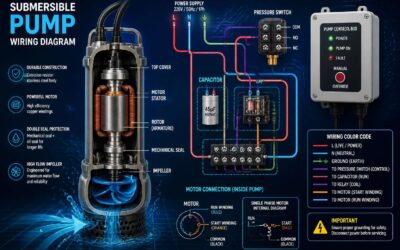
Electrical Safety and Wiring
In the water game, every amp counts and every fault is a drought in disguise. A dependable submersible pump 70m keeps the tap flowing when dry spells bite into South Africa’s daily water use, turning a potential crisis into routine reliability.
Electrical safety and wiring demand discipline as rigorous as any borehole siting. For installations, think grounding, moisture-rated enclosures, and robust cable management that survives submersion and heat cycles.
- Corrosion-resistant conduit and fittings
- Clear service access and protective enclosure
- Secure routing for power and control cables with proper strain relief
Maintenance should be a quiet habit: regular visual checks, inspect seals and insulation, monitor for unusual noises, and ensure housings stay intact. Compliance with South Africa electrical standards keeps that quiet guardian humming through seasons of stress.
Cable and Float Switch Considerations
In the quiet bowels of a South African borehole, installation is a pact with reliability. For a submersible pump 70m, the difference between steady flow and dry spells lies in cable choreography and float switch placement. Grounding, moisture-rated enclosures, and robust cable management that withstands submersion and heat cycles act as a calm under pressure. Corrosion-resistant conduit, clear service access, and protective enclosures keep the power path clean and confident.
During installation, cable routing matters as much as the pump’s depth. Secure power and control cables with proper strain relief, and shield them with moisture-rated conduit. Position the float switch to avoid debris and ensure reliable shutoff and restart. Provide a clear service access point and a sturdy enclosure to simplify future checks.
Maintenance is a quiet ritual: regular visual checks, seals and insulation inspection, and listening for unusual noises after commissioning. Keep housings intact through heat cycles, and document every inspection to catch creeping wear before it becomes a fault.
Maintenance Schedule and Common Issues
“Reliability isn’t luck; it’s a discipline,” a veteran technician reminds us as we contemplate the submersible pump 70m tucked in a South African borehole. In our climate, a steady maintenance rhythm—not reaction to a fault—frames the backbone of dependable water supply. Regular checks keep seals supple, cables dry, and motor windings calm through heat cycles.
- Moisture ingress and seal wear at depth
- Corrosion on conduits and fittings
- Debris and mineral buildup around the intake
A light, documentary approach to maintenance—recording readings and observations—helps catch creeping wear before it blooms into fault, preserving the calm under pressure that a borehole system requires.
Troubleshooting Quick Guide
Across rural South Africa, reliability is measured in days of uninterrupted taps. A calm, observant routine keeps the borehole humming and the homestead hopeful. For the installation and maintenance quick guide, the submersible pump 70m deserves steady listening and a patient, respectful approach.
Think of the first telltale signs as messages from the system. Moisture at seals, odd vibrations, or a dip in flow tell a story longer than a single fault.
- Moisture around seals or fittings
- Unusual motor hum or vibration
- Fluctuating flow or pressure
When signs appear, document them with the same care you give to a neighbor’s water trough—calm notes, clear observations, and a professional check that honors the life at the borehole.
Applications and Industry Uses
Residential Water Systems
Water security in South Africa is a daily conversation, and beneath every home lies a quiet engine that keeps taps flowing! The submersible pump 70m sits at the heart of many residential water systems, lifting groundwater to kitchens and laundry rooms with assured efficiency. Its presence reshapes planning, allowing families to rely on underground reserves when surface supplies falter.
In residential settings, common applications unfold like this:
- Domestic boreholes reliably feeding households
- Backup water for outages in urban and rural compounds
- Small garden irrigation and hydroponic setups
This engineering practice extends to installers and service teams who match headroom, flow, and motor protection with local supply conditions, reflecting industry uses from design to maintenance and fostering hydraulic literacy that keeps homes running smoothly.
Irrigation and Agriculture
Water is the soil’s memory, a line a SA farmer likes to repeat, and in drought-prone landscapes that memory often travels underground. The submersible pump 70m powers irrigation and water transfer, coaxing groundwater from deep bores to reservoirs, fields, and greenhouses with a quiet, relentless rhythm. What a lifter, turning underground reserves into reliable taps! Its ability to sustain steady head and flow reshapes farming calendars, letting growers plan ahead when rainfall wavers.
In irrigation and agriculture, this workhorse supports a spectrum of industry uses, from large-scale drip and micro-spray networks to farm ponds and remote stock watering. This model suits diverse terrains and crop cycles, enabling efficient water management across South Africa’s farms.
- Deep-bore irrigation for row crops and orchards
- Greenhouses and hydroponic systems requiring stable head
- Livestock water supply and farm reservoir transfer
Industrial and Commercial Uses
“Water is the lifeblood of industry,” a saying you hear on every big site. The submersible pump 70m is built to move water from deep bores to daylight with quiet, unrelenting power. In South Africa, this workhorse powers industrial and commercial water transfer, dewatering on site, and remote supply for factories and mines. When the head is measured in meters, this unit proves its mettle—steady, scalable, and ready to work.
- Dewatering and water management for construction and mining sites
- Industrial water transfer for factories, hotels, and municipalities
- Backup water supply for remote processing plants and utilities
Beyond raw power, customers value durable materials, corrosion resistance, and serviceability that suits South Africa’s varied climates. The unit integrates with existing pumping and control systems, delivering reliable head and flow where it matters most.
Mining and Dewatering
In South Africa’s mining belt, water is both obstacle and lifeline. The submersible pump 70m powers dewatering on rugged sites, moving water from boreholes and sumps to daylight with steady, reliable force. It supports on-site water management during blasting, backfilling, and ore processing, keeping operations safe and on schedule!
- Dewatering under variable ground conditions and water tables
- Remote site operation with reliable flow control
- Compatibility with existing mine pumping and monitoring systems
Beyond raw power, robustness and serviceability make it a trusted companion for SA’s remote camps and evolving mine infrastructure. The unit’s corrosion resistance and straightforward maintenance mean fewer disruptions when crews are miles from the nearest workshop. Reliability here is more than a spec; it’s peace of mind in a landscape that never stops.
Wastewater and Filtration
Within wastewater networks and filtration lines, the submersible pump 70m becomes a quiet workhorse, moving effluent and rinse water from sumps to treatment stages with steady assurance. Its compact footprint and dependable head make it ideal for tight basins and remote facilities where access is limited but demands are high.
From municipal plants to mining camps and food processing yards, this unit supports filtration cycles, process-water supply, and backwashing routines. It bridges pumping and filtration, delivering reliable flow even as head changes and solids content shift, keeping filtration trains in step with production schedules!
- Municipal wastewater transfer and lift stations
- Industrial filtration and process water recirculation
- Filtration plant backwash and sludge handling
At South African sites, easy integration with standard fittings and simple maintenance routines reduces downtime and extends service intervals, turning a rugged asset into a trusted partner in the lifecycle of water management.
0 Comments