
Understanding submersible pumps
What a submersible pump is and how it works
Powering South Africa’s wells with quiet strength, submersible pumps often outperform surface models. A striking statistic anchors the choice: energy efficiency sharply improves when the right solution is selected. Understanding which submersible pump guides farmers and towns to reliable water, even in demanding boreholes!
Defined, a submersible pump is a sealed unit whose motor sits below water level. It turns inside a chamber, pushing water upward through a discharge pipe as its impeller spins, converting electrical energy into kinetic force.
- sealed, oil-filled motor design
- impeller and volute that move water efficiently
- rugged, corrosion-resistant housing for tough groundwater
This blend of precision and ruggedness makes a submersible unit ideal for South Africa’s varied terrain, where consistent flow matters most.
Key components of a submersible pump
Power in a bottle of darkness—the borehole’s pulse. Studies note up to 30% energy savings when the right submersible pump is chosen, a statistic that travels from meter rooms into the veld. For those pondering which submersible pump suits South Africa’s demanding boreholes, the answer lies in the unit’s hidden components.
Inside the sealed chamber, the heart beats below water. A rugged, oil-filled motor turns a rotor that drives the impeller into a controlled ascent. The impeller and volute shape a steady flow, while a corrosion-resistant housing bears the veld’s bite. Reliability hides in the details.
- Sealed oil-filled motor
- Impeller and volute
- Rugged, corrosion-resistant housing
- Thrust and radial bearings
- Water-tight power cable and seals
These elements compose a shadowy choir that keeps boreholes singing when the surface world goes quiet.
Common applications for submersible pumps
In South Africa’s thirsty ledger, up to 30% energy savings await the buyer who asks the right question: which submersible pump suits the borehole’s temperament? The choice isn’t about bravado; it’s about aligning pressure, depth, and endurance with the pulse of the aquifer.
Common applications span fields and fortunes, from irrigation and farm water supply to domestic borehole extraction. In larger schemes, these pumps support wastewater handling, mining dewatering, and aquaculture, where steady head and reliable seals matter more than splashy marketing.
- Irrigation and farm water supply
- Domestic borehole extraction for households
- Wastewater handling in rural and municipal settings
- Mining dewatering and construction-site water removal
Where a borehole meets the veld and the budget, the right submersible pump keeps the tap singing and the meters honest.
Differences between submersible pumps and other pump types
On South Africa’s hard-won water budgets, up to 30% energy savings hinge on the question which submersible pump best fits the borehole’s tempo. The answer hinges on depth, pressure, and endurance, not bravado.
Compared with surface or jet pumps, submersible models are meant to live in water. No priming is needed, hard seals cope with damp, and the motor stays cooler inside the borehole — simple and effective! For fixed head and variable suction, they excel, while surface pumps often struggle when the water column is deep.
Installing a submersible pump is a different discipline; its success hinges on cable rating, valve configuration, and the head the system must deliver. The right choice balances borehole depth, discharge pressure, and the system’s duty cycle.
Types of submersible pumps
Centrifugal submersible pumps
“Get the right pump, and half your headaches disappear,” a veteran mechanic likes to say. In the realm of which submersible pump options exist, centrifugal submersible pumps come in several guises that suit different tasks. They’re typically categorized by stage count and head, not by size alone: single-stage units for low-head, high-flow tasks, and multistage (or turbine) configurations that build pressure by stacking impellers inside a sealed well. Material choices—stainless steel, cast iron, and corrosion-resistant alloys—address SA’s mineral-rich water and aggressive soils.
Common configurations include:
- Single-stage centrifugal submersible pumps for shallow wells and flat terrains
- Multi-stage centrifugal submersible pumps for higher lift and irrigation
- Vertical turbine (high-head) submersible pumps for deep boreholes
For buyers wondering which submersible pump suits their bore, depth and pressure profiles matter in the selection.
Submersible sewage and solids-handling pumps
For urban water systems and remote boreholes alike, understanding which submersible pump handles solids is crucial. Submersible sewage and solids-handling models are built to survive gritty intakes and keep solids at bay.
Key variants include:
- Grinder pumps that macerate solids
- Solid-handling centrifugal pumps with non-clog impellers
- Vortex pumps for high solids without snagging
Choose models by head, flow, and the largest solids they can pass. Factor service intervals, maintenance access, and reliability in SA conditions.
Submersible well and borehole pumps
Across South Africa’s terrain, choosing which submersible pump governs a borehole’s fate is no trifling matter. Submersible well and borehole pumps descend into darkness, where metal breathes and water answers with a patient whisper. The ideal model harmonizes head and flow, resists the grind of gritty intakes, and offers longevity under SA’s harsh conditions. Witness the moment a community breathes again when the right submersible pump stands between drought and daily life, quiet as a tomb but steadfast as a sentinel.
Types include:
- Multistage centrifugal submersible well pumps for deep bores
- Solid-handling submersible borehole pumps with non-clog impellers
- Vortex and turbine designs that pass high solids without snagging
Each variant guards your water future, even as SA storms press down.
Submersible drainage and sump pumps
Water is life, they say, and in South Africa’s heat and sudden storms, drainage and sump pumps can mean dry feet and quieter nights. These submersible heroes slip into basements and pits, breathing softly as water answers with a patient whisper. When you ask which submersible pump fits a property, you weigh space and reliability—the small choices that save a floor.
- Submersible drainage pumps designed to move stormwater away from spots
- Submersible sump pumps with automatic switches for basements and workshops
- Solids-handling or dirty-water pumps that tolerate grit without clogging
These variants share resilience, built to endure SA’s dusty heat and sudden downpours. For those asking which submersible pump best suits a rural home or a workshop, the answer is resilience. They are the quiet guardians of homes, farms, and communities, keeping spaces livable even when the weather tests the horizon.
Submersible condensate and utility pumps
South Africa’s weather keeps us on our toes: sudden storms can turn a quiet yard into a miniature lake in minutes, yet a dependable submersible pump turns panic into preparedness. A compact unit tucked beside a shed or in a basement becomes a silent ally, swallowing run-off before it reaches critical levels and letting evenings stay peaceful.
Types of submersible pumps—condensate and utility models—are built for the job. They move small volumes of water quickly, quietly, and with minimal fuss, avoiding splashy surprises in tight spaces.
- Condensate pumps for HVAC units and air handlers
- Utility pumps for basements, workshops, and light-duty drains
- Portable models with automatic switches for flexible setups
Consider space, noise, and startup needs; for many readers, which submersible pump suits a compact workspace is a question of fit as much as function.
How to choose the right submersible pump
Assessing flow rate, head, and efficiency
In South Africa, the right choice of which submersible pump can turn a stubborn water source into a reliable lifeline. Industry notes that up to 30% of energy can be saved when the pump is matched to the task, keeping water flowing and bills manageable. Flow, head, and efficiency become the triad to respect.
Assessing flow rate, head, and efficiency lays the groundwork. Flow should meet demand without overloading the motor; head accounts for vertical lift and pipe losses; efficiency ties motor power to actual water movement.
- Match flow to demand while avoiding overkill
- Account for head and losses in piping
- Choose high-efficiency motors suited to local power supply
Beyond numbers, consider submersion depth, water quality, and site conditions. When these harmonise, the submersible pump becomes a trusted ally, turning scarce water into a reliable flow and making energy use speak softly rather than shout.
Material, seal, and durability considerations
In SA, up to 40% of pump failures come from ignoring material and seals. Choosing the right submersible pump isn’t a numbers game—it’s a durability test: material, seal, and durability form the triad that keeps flow steady and bills sane. If you’re wondering which submersible pump to pick, look at how the body resists corrosive water, how the seals handle grit, and whether the bearings cope with long runs in hot, dusty conditions.
- Material: corrosion-resistant alloys like stainless steel 316 or epoxy-coated cast iron.
- Seals: robust mechanical or cartridge seals with shaft sleeves; double seals for dirty water.
- Durability: bearings and impellers built to resist abrasion and temperature swings.
- Maintenance: ensure easy access to spare parts and local aftersales support.
When those elements align, you’ll know which submersible pump suits your borehole, well, or pit, and you’ll enjoy a quieter, longer-lasting operation.
Electrical requirements and safety basics
Electrical faults derail performance more often than grit in the water. Rough field data show roughly one in four pump failures trace to the supply and protection setup. When evaluating which submersible pump to deploy, start with compatible electrical requirements and solid safety basics.
Match the supply: voltage and phase must align with the motor. In South Africa, that typically means 230V and 50Hz, with single-phase for lighter tasks and three-phase for heavier loads. Look for motors with built-in thermal protection and a rugged enclosure (high IP rating) to handle damp boreholes and dusty pits.
Safety basics focus on compliance and protection. Ensure installations follow local codes, with proper isolation and protective devices, and seek products with reputable certification marks. A reliable pump balances the right electricals with durable bearings and seals to resist water ingress and grit.
Cost of ownership and maintenance considerations
Cost is a conversation that continues long after the crane has lowered the pump into place. The sticker price covers only the opening scene; the true bill arrives as energy bills, unexpected downtime, and parts replacements accumulate. When choosing which submersible pump, weigh not just price but total cost of ownership. A borehole climate in South Africa rewards efficiency, durability, and reliable protection—features that make the difference between a one-season fix and a years-long rhythm of dependable flow.
Maintenance considerations hinge on robust construction and accessible service. Look for motors with efficient bearings, rugged seals, and dependable enclosures that tolerate damp boreholes and gritty pits. A well-designed unit couples reasonable upfront spend with long-term reliability, ensuring ongoing water supply without the financial sting of frequent repairs.
Installation, operation, and maintenance tips
Site preparation and proper installation steps
Your SA project deserves a pump that behaves. A solid siting plan cuts downtime and energy waste, and poorly positioned units waste power. When deciding which submersible pump to buy, start with site prep: stable base, clean intake, and a discharge path free of kinks.
- Choose a level, solid mounting surface and stand the unit upright as it’s lowered.
- Attach the discharge piping, fit a valve where needed, and seal all connections.
- Clear the suction intake of debris and route the power cable with strain relief.
- Connect to a protected power supply with earth/grounding and an RCD as per local regs.
Operation and maintenance notes: Once in operation, monitor current and noise, keep the unit submerged and ensure clear water around the motor. Regularly inspect seals, bearings, and intake screens, clean debris, and log performance to spot trouble early.
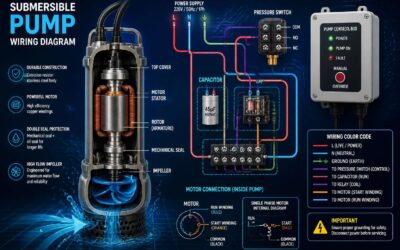
Wiring, power supply, and control options
Installation is the quiet oath you keep to your project. Choosing which submersible pump demands a sense of place: a level, stable base, a clean suction, and a discharge path that breathes without kinks. Set the unit upright as it lowers, align fittings, and seal connections with care. A thoughtful installation reduces downtime and protects your investment.
Operation thrives on attentiveness. Listen for subtle changes in current and sound, and ensure the pump stays submerged with clear water around the motor. For wiring, power supply, and control options, lean into safety and reliability.
- Protected power supply with earth/grounding and compliance with local safety standards
- Control options such as a float switch, dry-run protection, or remote monitoring
- Cable routing with strain relief and secure connections to prevent wear
- Observe seals, bearings, and intake screens for signs of wear and as signals of health
Maintenance reads like a diary of wear: shifts in current, unusual hums, or changes in water clarity hint at the pump’s evolving story. The right choice of which submersible pump anchors your site through seasons with grace.
Startup checks and initial operation
In a landscape where water is precious, selecting which submersible pump can feel like choosing a guardian for your wells and sumps. The right balance of flow, head, and endurance translates into fewer interruptions and steadier yields across South Africa’s varied climates.
Installation anchors the unit with a level, stable base; a clear suction, and a discharge path that breathes without kinks. As it lowers, note upright orientation, aligned fittings, and clean seals, for a calm start that protects the system’s quiet integrity.
- Current draw and vibration
- Sound and submerged operation
- Water clarity and intake cleanliness
Operation thrives on attentive observation. Listen for subtle changes in current and sound, and watch for signs of wear on seals and screens. This awareness keeps your site flowing through seasons with quiet confidence.
Routine maintenance and inspections
In a landscape where water scarcity sharpens decisions, the installation of which submersible pump becomes a quiet act of trust. Anchor the unit to a level, stable base, ensure the suction is clear and the discharge path breathes freely; a calm start guards the system’s life.
Operational vigilance is the pulse: monitor current draw and vibration as the pump settles; submerged operation dampens noise but not the need for attentive listening. Watch water clarity and intake cleanliness, because debris shadows efficiency and invites wear.
Maintenance and inspections unfold as a philosophy more than a checklist. Look for signs of wear on seals and screens, and note any drift in performance that hints at a slowly deteriorating fit.
- Inspect seals and screens for wear or blockages
- Ensure intake remains clear of debris
- Log operating data to detect gradual changes
Troubleshooting common problems
Water scarcity shapes every decision, and in South Africa that quiet negotiation happens long before the switch is flipped! ‘A pump is judged by its quiet endurance,’ an old installer likes to say, and that verdict is written in the field—where reliability becomes a form of respect and restraint.
Choosing which submersible pump is only half the equation; installation matters as much as capacity. Anchor the unit to a level, stable base, ensure suction remains clear, and the discharge path breathes freely for a calm start.
Operational vigilance is the pulse: monitor current draw and subtle vibration as the unit settles. Submerged operation dampens noise, yet attentive listening remains essential to a long, healthy life.
Maintenance unfolds as a philosophy, not a checklist; log performance and note slow drift.
- Air pockets or cavitation signs
- Debris at intake or restricted flow
Safety, warranty, and service options
In South Africa’s water-wise landscape, choosing which submersible pump is a study in restraint and reliability. The quiet endurance of a well-chosen unit pays off in the long run, earning respect from those who trust steady flow over flashy specs!
Installation, operation, and maintenance are inseparable acts. Safety governs every interface with power and fluid, from secure mounting to compliant electrical connections. Warranty terms matter as a social contract; service options often include local technicians and clear, responsive support.
To make these relationships tangible, consider a concise overview of available service options:
- Authorized service centers with genuine parts
- Remote diagnostics and performance monitoring
- Flexible warranty upgrades aligned to risk and use
Maintenance as philosophy keeps your pump in quiet service—regular checks become ritual rather than relics of neglect. The right mindset turns maintenance from burden into stewardship, a subtle courtesy to your landscape and your budget.
0 Comments