
Understanding the Submersible Pump 400 Feet
Overview of Submersible Pumps and 400 Feet Depth
“Depth is destiny,” whisper engineers working in South Africa’s water-stressed farms. The right borehole brings drought resilience, turning a stubborn trickle into a dependable lifeline. Submersible technology dives beneath the surface where the real power awakens, proving how depth and design fuse to sustain irrigated landscapes and thriving communities.
The submersible pump 400 feet is built to endure long submersion while delivering steady pressure at depth. Within its compact body, a motor and seals work in concert. Key advantages include:
- Deep head efficiency
- Corrosion resistance
- Reliable cabling
At a 400-foot depth, engineers balance flow, head pressure, and energy use, ensuring pumps reach the right volumes without overheating. In South Africa’s varied terrains, a depth-rated unit can be a quiet ally for boreholes, winching water from the unseen to the visible.
How 400 Feet Depth Impacts Performance
Depth is more than a measurement; it is a test of endurance. In South Africa’s arid farms, the submersible pump 400 feet embodies that truth, translating buried pressure into reliable flow when surface pumps falter. Inside its compact shell, a motor and seals work in concert to resist long submersion.
At depth, performance hinges on balancing head with energy use. Factors like motor cooling, cable integrity, and hydraulic losses shape how the unit delivers steady pressure without overheating. Here are the levers that quietly govern every stroke of delivery:
- Deep head efficiency
- Thermal management at depth
- Corrosion-resistant materials and seals
This depth tests the pump’s endurance. For the submersible pump 400 feet, subtle tweaks in impeller geometry and seal housing sustain flow as hydrostatic pressure climbs. With robust cabling and materials, the unit stays cool and reliable, turning deep wells into lifelines.
Key Specifications to Check for 400 Feet Installations
On South Africa’s sun-scorched farms, metres below ground hold more truth than heat. The submersible pump 400 feet stands as a quiet sentinel, turning buried pressure into reliable flow when surface pumps slump. At this depth, every stroke is an act of endurance, and the unit’s compact shell becomes a fortress against prolonged submersion.
To navigate 400-foot installations with confidence, understand the key specifications that govern performance.
- Motor power and efficiency tailored to sustained head at depth
- Maximum head and flow curves compatible with 400 feet
- Cable rating, insulation, and length for deep-well reliability
- Seal design and materials that resist corrosion and wear
- Impeller geometry and hydraulic losses balancing pressure and energy
With these specs in view, the pump meets the demand with quiet steadfastness, resisting heat and fatigue as the groundwater reservoir holds its breath.
Common Myths About Deep-Well Submersible Pumps
“Depth tests the heart of a bore,” murmurs a veteran of the ridges. On South Africa’s plains, the submersible pump 400 feet keeps a stubborn rhythm when surface pumps falter. A whisper under the sun, it transforms buried pressure into a patient, reliable flow!
- Myth: Deep wells always fail at 400 feet.
- Myth: Every 400-foot installation is a lottery of luck.
- Myth: A deeper pump means louder clamor and quicker fatigue.
In truth, like shadows at dusk, myths waver when the right materials, seals, and hydraulics align with depth. The myth dissolves into quiet arithmetic, where endurance and clarity govern the flow.
Sizing Considerations for a Submersible Pump 400 Feet
Depth at 400 feet is not merely a measurement; it is a conversation between gravity and water’s stubborn will. In South Africa’s arid heart, sizing a submersible pump 400 feet becomes more than horsepower—it is a rhythm that preserves pressure and guards against cavitation. “Depth is a patient negotiator,” says a veteran of the ridges, and that patience shows in every joint, seal, and pump column.
- Ensure the pump’s flow matches the well’s sustained yield
- Match motor power and pump stages to lift requirements
- Account for friction, piping, and electrical losses across long runs
For SA projects, the craft lies in harmonizing materials, seals, and hydraulics to endure beneath harsh sun and changing water levels. When depth, hydraulics, and endurance align, the bore yields a steady, quiet cadence rather than a loud, costly compromise.
Applications and Use Cases for a Submersible Pump 400 Feet
Drilling and Deep-Well Water Supply Scenarios
In South Africa’s arid heart, water reliability is a lifeline. “Reliability isn’t flashy; it’s the backbone of a village’s water,” a field engineer says. When wells descend to 400 feet, a submersible pump 400 feet becomes the quiet hero, delivering steady flow where surface sources fail.
Applications span rural potable supply, off-grid homesteads, and farms where steady pressure protects harvests. Deep wells also support remote mining camps and industrial sites that depend on dependable groundwater.
- Rural potable water systems drawing from deep aquifers
- Irrigation and livestock watering for expansive farms
- Remote mining camps and off-grid facilities needing steady pressure
Durability matters: seals, corrosion resistance, and efficient cooling beat heat and dust. A well-chosen installation keeps a submersible pump 400 feet performing with minimal outages and clean water for communities.
Industrial and Municipal Water Management at Depth
In South Africa’s arid heart, water reliability is a lifeline. “The moment water stops, the future stalls,” a field supervisor once said, and that warning echoes whenever wells dip toward 400 feet. A submersible pump 400 feet becomes the quiet engine behind reliable supply, humming where surface sources falter and uncertainty lingers.
- Rural potable systems drawing from deep aquifers to ensure taps stay on when surface options fail
- Irrigation and livestock watering for expansive farms that demand steady pressure even in heat and drought
- Remote mining camps and off-grid facilities needing dependable groundwater supply and uninterrupted process water
Used across rural and industrial settings, the depth-driven capability of this setup translates into consistent flow, improved yield, and reduced outages, keeping communities protected and operations efficient in the South African landscape.
Agricultural and Irrigation Depth Challenges
In South Africa’s arid heart, farm water reliability isn’t a luxury—it’s a lifeline. A submersible pump 400 feet quietly guards the taps, pulling from stubborn aquifers with steady pressure when surface sources falter.
Key applications in agriculture and irrigation include:
- Deep-well irrigation for orchards, vineyards, and row crops—drought politely bows out.
- Livestock watering systems that preserve pressure through heat and drought.
- Nursery and greenhouse moisture control for precise seedlings and thriving transplants.
In the SA landscape, these capabilities translate to resilient yields, fewer outages, and calmer farmers!
Remote or Hazardous Locations Requiring Submersibles
In South Africa’s arid heart, water reliability is a lifeline— a conviction echoed by a veteran farmer who says, “Water is the difference between harvest and heartbreak.” I’ve watched the submersible pump 400 feet keep taps flowing where surface sources wither, quietly and persistently, even in remote or hazardous locations.
Use cases arise across rugged terrain and challenging sites, where conventional pumps falter. In these contexts, equipment that can descend to depth and endure pressure delivers steady performance and reduced downtime.
- Mining or remote industrial wells where surface pumping is impractical
- Geothermal or environmental monitoring wells needing sealed submersion
- Rural water supply networks and emergency backups for drought-prone farms
In the SA landscape, resilience isn’t a luxury; it’s a strategy. The submersible pump 400 feet embodies quiet reliability, turning depth into dependable yield and giving farmers confidence when taps are far away.
Design, Technology, and Performance of a Submersible Pump 400 Feet
Construction Materials and Corrosion Resistance
At 400 feet, a submersible pump faces a crucible of pressure and mineral content that asks more than raw power! The design fuses compact, vibration-aware geometry with a sealed motor and a resilient drive train, so reliability isn’t an afterthought but a performance creed. This submersible pump 400 feet is engineered to endure these conditions with thoughtful thermal paths and balanced hydraulics.
- 316 stainless steel and corrosion-resistant alloys
- Ceramic bearings and precision seals
- Epoxy or polyurethane coatings for external components
- Non-metallic impellers where chemical compatibility matters
Construction materials and corrosion resistance sit at the core of longevity. Together, these choices translate into sustained flow, reduced downtime, and predictable service across South Africa’s varied aquifers and weathered soils.
Impeller Types and Flow Characteristics at Depth
In the liquid dusk beneath the cap of the world, a design here marries stealth and stamina. Its form is compact, tuned to curb vibration, with a sealed motor that defies the dark and a drive train built for the long march. In South Africa’s varied aquifers, power must whisper rather than shout—and this depth-bound machine delivers reliability with a patient, unyielding cadence!
- Open impellers for generous passages that swallow grit and fibrous matter
- Semi-closed impellers for efficiency and durability in challenging water
- Vortex or non-clog variants to thwart debris bridges in briny or silty conditions
The impeller—the beating heart of depth—takes shape to meet the pressure with grace. These impeller types and their flow characteristics intertwine, each choice steering how water moves toward the surface against the pull of head and heat.
Flow characteristics at depth become a measured arithmetic: discharge meets head, efficiency tightens its grip, and cooling pathways keep the motor temperate in the furnace of pressure. The submersible pump 400 feet translates depth into dependable supply, a nocturnal workhorse that keeps wells honest and communities sustained.
Sealing, Pressure Management, and Thermal Protection
Beneath the midnight ink of the borehole, a sentinel hums where water presses its invisible hand. The submersible pump 400 feet wears sealing that resists the void, a motor sealed against the deep, and a drive train forged for the long, patient march. In this chambered world, reliability is the lantern that never falters, and the quiet heartbeat of steel becomes a covenant between surface and source.
- Robust seals engineered for deep head and grit resistance
- Pressure-balanced housings that avert leaks at depth
- Thermal-management channels that carry heat away from the core
I hear the unit breathe, a whisper of coolant flits through concealed channels, keeping the core temperate when the pressure climbs! The design converts depth into steady supply, where sealing, pressure management, and thermal protection perform a dark ballet that sustains wells and communities.
Motors and Power Requirements for Deep Submersion
Design and technology converge in the submersible pump 400 feet, where the motor sits in a pressure-tolerant cradle and is cooled by the surrounding water. The drive train is sealed, bearings fortified, and the stator shielded from grit. In South Africa’s deep wells, reliability is the quiet pulse that keeps communities supplied when the night is long and the ground unyielding.
Power requirements for deep submersion shape the performance curve. Three-phase 400V at 50 Hz is common for heavier installations, with VFDs smoothing starts and regulating flow to meet head without wasting energy. Careful cable sizing and protection reduce losses along the run, keeping the motor cool and the current draw predictable as head climbs.
- Three-phase power variants suitable for SA installations
- Robust cooling and heat-dissipation design for continuous duty
Efficiency and Energy Saving at 400 Feet
At 400 feet, life above ground keeps a quiet rhythm through a single, unassuming instrument. The submersible pump 400 feet becomes a conductor in a deep-water chamber, turning gravity into a trustworthy lifeline. “Efficiency is civilization at depth,” a veteran engineer reminds us.
Design and technology here kiss the edge of possibility. The motor rests in a pressure-tolerant cradle, cooled by the surrounding bore water, while seals and bearings guard every revolution. A modern VFD whispers torque, smoothing starts and matching flow to head with economy and grace.
- Precision impeller geometry for steady flow at depth
- Integrated cooling channels and real-time thermal monitoring
- Low-friction bearings and sealed train to minimize losses
With submersible pump 400 feet, performance at depth becomes predictable, energy-conscious operation, where every watt earns its keep and maintenance cycles stay comfortably distant.
Reliability and Life Expectancy in Deep Installations
At 400 feet, where daylight forgets to linger, the submersible pump 400 feet becomes a quiet heartbeat for water. Field data hint at 99.7% uptime when cooling and seals stay intact—a statistic that reads like a promise. A veteran engineer whispers, “Quiet machines make loud assurances.”
Design and technology here brush against possibility’s edge. The motor rests in a pressure-tolerant cradle, the shell hugging bore-water cooling, while seals and bearings guard every revolution.
- Hydrodynamic impeller shaping for steady depth flow
- Embedded cooling channels with real-time temperature sensing
- Sealed, low-friction bearing train to curb losses
Performance at depth becomes a lucid rhythm: predictable, energy-efficient, and forgiving of harsh conditions. Materials engineered for subterranean corrosion, plus smart sealing, extend life expectancy in deep installations and keep South Africa’s wells singing through the seasons.
Installation, Safety, and Maintenance for a Submersible Pump 400 Feet
Site Preparation and Setup for Deep-Well Systems
“Water has a patient memory,” a seasoned field technician often says, and the submersible pump 400 feet proves it. Installation hinges on a stable borehole, corrosion-proof materials, and tidy cable routing. Allow room for thermal expansion and quiet operation.
Safety is non-negotiable. Use trained technicians, maintain electrical isolation, and ensure proper grounding. In South Africa, comply with local standards and keep the setup away from incompatible materials. In challenging environments, a measured, respectful approach preserves both people and pump.
Maintenance is a ritual of quiet care that keeps the system alive at depth. Regular checks focus on electrical integrity, seals, bearings, and corrosion resistance, plus watching flow and pressure for whispers of trouble. For a submersible pump 400 feet, maintenance matters.
- Electrical connections and insulation
- Seals, bearings, corrosion checks
- Flow and pressure monitoring
Electrical Wiring, Control Panels, and Safety Standards
At the 400-foot frontier, installation is a hushed negotiation with earth and water. The submersible pump 400 feet earns its reputation through stubborn endurance, so every component must align with reliability from the first bolt to the last seal. We treat every bolt as a vow.
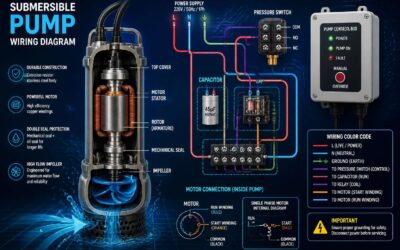
Electrical wiring and control panels for deep-well work demand clarity and resilience. Use corrosion-resistant enclosures, shielded cables, and tidy routing to minimize wear. In South Africa, safety standards require strong isolation and solid grounding for reliable operation. Our teams see this daily.
Maintenance is quiet, patient stewardship—inspecting insulation, seals, bearings, and flow stability to catch trouble early. The following considerations keep performance faithful to depth:
- Electrical integrity and insulation continuity
- Seals, bearings, and corrosion checks
- Safe, compliant system grounding
Maintenance Routines, Inspection, and Troubleshooting
Installation at depth is a hushed pact with rock and water. The submersible pump 400 feet demands components that endure from the first bolt to the final seal, each surface polished by time and pressure. The chambered corridors of a borehole become a stage where precision meets endurance, and every connection carries a quiet vow.
Safety is a language spoken in isolation and grounding. In South Africa, robust isolation and solid grounding are non-negotiables for reliable operation. Corrosion-resistant enclosures shield sensitive electronics, shielded cables guard against wear, and tidy routing keeps the heartbeat steady as depths increase.
Maintenance is patient, thoughtful stewardship. Inspect insulation, seals, and bearings; monitor flow stability; listen for subtle shifts in vibration and pressure. With a cadence of routine checks and non-disruptive diagnostics, trouble remains at bay, and performance threads the needle between depth and demand.
0 Comments